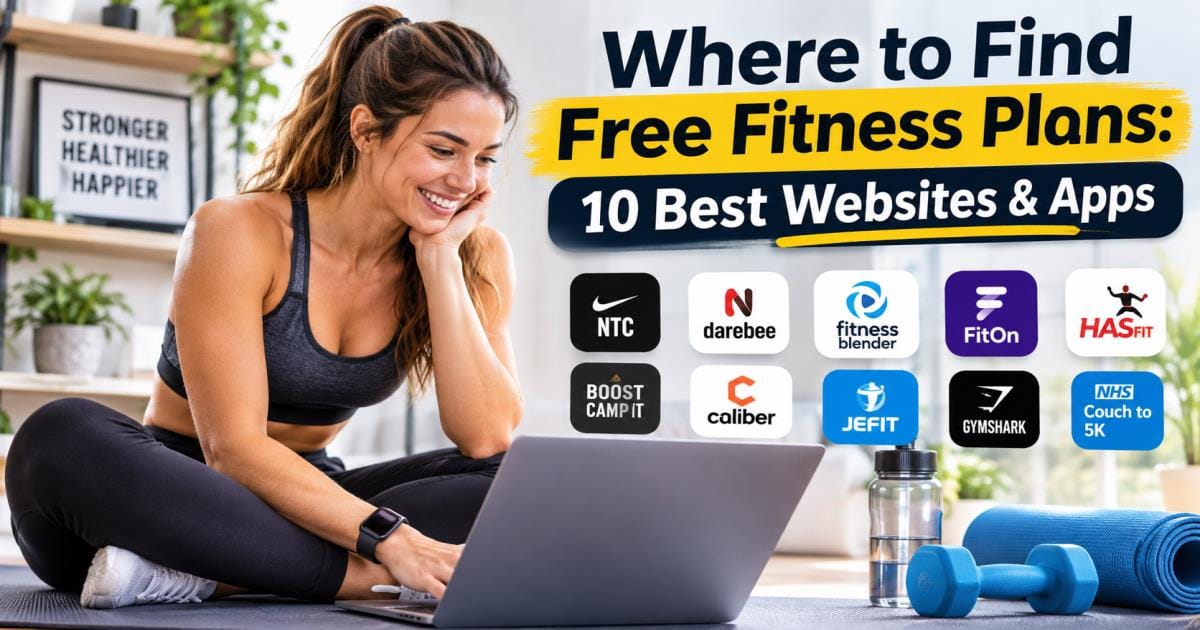

Looking for where to find free fitness plans that actually work? You don’t need expensive gym memberships or personal coaches to reach your goals. From structured strength programs and bodyweight home routines to couch-to-5K running guides, top digital platforms offer high-quality training at zero cost. Whether you want to burn fat or build muscle, explore the 10 best free fitness apps and websites designed for all fitness levels.
Where to Find Free Fitness Plans Online?
You can access where to find free fitness plans across open-access websites like Darebee and HASfit, unlocked mobile applications such as Nike Training Club and Gymshark Training, and freemium platforms like FitOn, JEFIT, Boostcamp, Caliber, and Fitness Blender. For running, public resources like the NHS Couch to 5K program provide structured endurance schedules at zero cost.
Understanding how platforms structure access saves time and money:
- Completely Free Platforms: Non-profit sites provide printables, routines, and multi-week schedules without paywalls or mandatory accounts.
- Freemium Apps: Tools like JEFIT and FitOn grant access to video libraries and logs, reserving automated coaching or custom meal plans for paid tiers.
- Free Trials: Commercial gym platforms often ask for payment details upfront to unlock 7- to 30-day trials, which automatically charge your card if not canceled in time.
Websites offer large viewports and printable PDFs for home setups. Mobile apps excel at gym-floor tracking, offering interval timers, logbooks, and offline video access.
To choose the right option, align the program with your target:
- Strength and Muscle Gain: Focus on progressive overload tracking and structured lifting splits.
- Fat Loss and Heart Health: Pick high-intensity interval circuits, bodyweight routines, and steady cardio work.
- Mobility: Select guided yoga, mat Pilates, and structured stretching routines.
10 Best Websites & Apps to Find Free Fitness Plans
1. Nike Training Club – Best Free Guided Workout Plans
Nike Training Club provides a fully unlocked library of video- and audio-guided routines created by certified trainers without hidden paywalls.
- Workout Categories: Full-body strength, cardio circuits, yoga, core conditioning, mobility, and endurance sessions.
- Training Levels: Options span basic movement patterns for beginners to high-intensity athletic conditioning for experienced lifters.
- Equipment: Includes bodyweight routines requiring zero equipment for small spaces alongside gym strength programs using barbells, dumbbells, and kettlebells.
- Access: Entirely free to use. Creating a basic user account lets you sync progress and save custom routines.
2. Darebee – Best Free Printable Fitness Plans
Darebee is an independent, non-profit resource offering thousands of visual workout charts and multi-week programs.
- Printable Routines: Downloadable visual grids illustrate repetitions, sets, and movement mechanics without needing an active internet connection.
- Challenges and Calendars: Structured 30-day challenges target core strength, bodyweight cardio, and mobility progression with daily tracking.
- Bodyweight Focus: Deep focus on calisthenics, functional movement, and plyometrics designed for home environments.
- Equipment Needs: Almost entirely equipment-free, making it ideal for travel training or home setups.
3. Fitness Blender – Best Free Home Workout Programs
Fitness Blender features over 600 full-length video workouts searchable by duration, difficulty, burn estimate, and target body part.
- Exercise Variety: Includes strength training, low-impact cardio, kickboxing, HIIT, kettlebell routines, and flexibility flows.
- Video Format: Features a distraction-free setup with a real-time countdown timer, burn estimate meter, and voiceover cues without background music.
- Beginner Accessibility: Offers low-impact modifications for users starting a routine for the first time or returning from a break.
- Free Access: Hundreds of full-length workout videos and search filters remain free. An optional paid tier adds custom calendar builders and recipes.
4. FitOn – Best Free Fitness Plans and Video Classes
FitOn brings studio-style group classes straight to your screen, featuring workouts led by certified fitness professionals.
- Guided Classes: On-demand video sessions cover dance cardio, HIIT, strength, barre, yoga, Pilates, and stretching.
- Class Duration: Sessions range from quick 5-minute warmups and core blasts to 45-minute full-body strength workouts.
- Training Options: Set weekly workout goals and pick class recommendations based on available daily time.
- Free Features: Unlimited access to standard workout videos is free. Upgrades add offline video downloads and custom meal guidance.
5. HASfit – Best Free Fitness Plans for Beginners
HASfit (Heart And Soul Fitness) provides hundreds of free, full-length workout videos designed to keep movement accessible to all fitness levels.
- Beginner Focus: Every exercise video demonstrates standard and modified movements simultaneously, allowing you to adjust intensity in real time.
- Home Workouts: Flexible routines tailored for living room spaces using minimal gear like dumbbells or resistance bands.
- Low-Impact Options: Dedicated schedules protect sensitive joints, knees, and lower back structures.
- Program Access: Video routines on YouTube and their main website are completely free. An optional app offers calendar sync tools.
6. Boostcamp – Best Free Structured Gym Workout Programs
Boostcamp acts as a digital hub for proven strength training and powerlifting programs, organizing community routines into a clean layout.
- Coach-Designed Programs: Features battle-tested routines from recognized strength coaches (including linear progressions, Push-Pull-Legs, and hypertrophy splits).
- Strength and Muscle Building: Focuses on compound barbell movements, progressive weight logging, and rest timers.
- Equipment Needs: Built primarily for commercial gym facilities or home garage gyms with barbells, racks, and plates.
- Free Access: Access to core community programs, rest timers, and basic weight logging is free. Paid features add custom routine builders.
7. Caliber – Best for Strength Training Plans
Caliber offers a data-driven approach to strength training, using progressive overload mechanics to drive muscle growth and performance.
- Strength Architecture: Focuses on resistance training principles rather than short-term cardio burn gimmicks.
- Form Guides: Includes an exercise database with written instructions and video demonstrations for hundreds of lifts.
- Progression: Adapts from absolute beginners starting with bodyweight exercises up to experienced lifters managing training volume.
- Free Features: The core app—including workout logging, routine creation, exercise guides, and progress tracking—is 100% free with no ads.
8. JEFIT – Best for Gym Workout Planning
JEFIT is a workout planner and logbook designed for lifters who want total control over their gym routines and exercise tracking.
- Exercise Database: Contains over 1,400 detailed exercises with animated guides categorized by target muscle groups.
- Workout Templates: Thousands of free community-created routines alongside default plans tailored for strength or maintenance.
- Custom Logging: Record set counts, weight lifted, rest intervals, and total workout volume over time.
- Free Access: The basic free tier includes full logbook capabilities supported by ads. Elite subscriptions remove ads and add analytics.
9. Gymshark Training – Best Free Gym and Home Workouts
Gymshark Training provides an ad-free mobile app designed to help users follow structured training plans created by elite trainers.
- Structured Programs: Multi-week training plans target specific goals, including lean muscle growth, conditioning, and core stability.
- Exercise Mechanics: Video tutorials show correct posture, execution speed, and target muscle activation for every movement.
- Modes: Switch filter views between home-based bodyweight/dumbbell routines and full commercial gym setups.
- Access: Completely free to download and use without subscription paywalls or compulsory purchases.
10. NHS Couch to 5K – Best Free Running Plan for Beginners
Developed by the UK’s National Health Service, Couch to 5K is a 9-week running program designed to take absolute beginners from a sedentary routine to completing a 5-kilometer run.
- Structured Plan: Builds stamina through three weekly sessions combining walking and running intervals.
- Beginner Progression: Starts with light 60-second jogging intervals alternated with brisk walking, slowly extending running durations each week.
- Audio Coaching: Friendly voice cues notify runners when to switch between walking and running to avoid pace burnout.
- Cost: 100% free with no subscription upgrades, downloadable via mobile app stores or public web guides.
Best Free Fitness Plans for Different Goals
| Goal Focus | Ideal Training Methodology | Recommended Free Platforms |
| Fitness Plans for Women | Hybrid Strength, Pilates & Cardio | FitOn, Nike Training Club |
| Beginner Routines | Low-Impact Bodyweight & Mobility | HASfit, NHS Couch to 5K, Darebee |
| Weight Loss | Dynamic HIIT & Compound Circuits | Fitness Blender, FitOn |
| Muscle Building | Heavy Progressive Resistance Splits | Boostcamp, Caliber, JEFIT |
| Home Workouts | Bodyweight & Dumbbell Training | Darebee, Gymshark Training |
| Gym Training | Compound Barbells & Machines | Boostcamp, JEFIT, Caliber |
Free Fitness Plans for Women
When researching fitness plans for women or gender-neutral options tailored for specific physical goals, look for routines that prioritize functional strength, core stability, bone density, and postural alignment.
- Strength Training: High-volume resistance routines using dumbbells, kettlebells, or cable machines build lean muscle and support bone density.
- Home Options: Streamlined 20- to 30-minute mat routines using resistance bands or bodyweight resistance fit busy schedules.
- Cardio and Mobility: Pair moderate-intensity cardio with dynamic yoga to preserve joint health while supporting overall recovery.
- Goal Alignment: Select structured plans based on clear benchmarks, such as improving core stability, preparing for endurance events, or building lower-body strength.
Free Fitness Plans for Beginners
Starting a routine requires straightforward movement mechanics and low barriers to entry.
- Full-Body Workouts: Focus on compound foundational movements: squats, lunges, push-ups, inverted rows, and plank holds performed 2 to 3 times per week.
- Exercise Mechanics: Master bodyweight form before adding external loads like barbells or heavy dumbbells.
- Building Consistency: Start with manageable 15- to 20-minute sessions to establish habit momentum before ramping up intensity.
Free Fitness Plans for Weight Loss
Fat loss requires creating an energy deficit through nutrition while using exercise to preserve lean muscle tissue and maintain daily caloric expenditure.
- Cardio and Strength: Combine resistance training twice a week with interval-based cardio (HIIT) or steady-state aerobic work.
- Low-Impact Movement: Incorporate daily brisk walking (7,000–10,000 steps) and low-impact steady cardio to minimize joint strain while expending energy.
- Sustainable Habits: Focus on long-term adherence rather than extreme, daily depletion sessions that lead to burnout.
Free Fitness Plans for Muscle Building
Hypertrophy and strength gains rely on structural resistance training paired with adequate nutrition and sleep.
- Resistance Splits: Organize workouts into structured muscle-group splits such as Upper/Lower body splits or Push/Pull/Legs (PPL) routines.
- Progressive Overload Basics: Systematically increase load, repetition counts, or reduce rest intervals over time to challenge muscular structures.
- Rest and Recovery: Schedule 48 hours of rest for specific muscle groups between heavy training sessions to allow tissue repair.
- Progress Tracking: Use a structured workout logbook to record exact weights, sets, and repetitions performed during every session.
Free Fitness Plans for Home Workouts
Training at home eliminates commute times and membership fees while delivering great physical conditioning.
- Calisthenics: Use bodyweight resistance through variations of push-ups, bodyweight squats, glute bridges, mountain climbers, and dips.
- Resistance Bands: Incorporate affordable looped bands to add variable resistance to row, press, and curl movements.
- Dumbbell Workouts: Pair a single set of adjustable dumbbells with controlled tempo work to challenge target muscles.
- Weekly Home Schedule Example:
- Monday: Full-body bodyweight circuit
- Tuesday: Mobility work and active recovery
- Wednesday: Dumbbell strength split
- Thursday: Rest day
- Friday: Bodyweight cardio circuit
- Saturday: Outdoor walking or running
- Sunday: Rest day
Free Fitness Plans for Gym Training
Commercial fitness centers offer access to specialized resistance equipment, power racks, and heavy free weights.
- Full-Body Routines: Ideal for training 2 to 3 days per week, hitting every major muscle group in a single session.
- Upper/Lower Splits: Splits training across four weekly workouts (two upper body sessions, two lower body sessions), optimizing volume and recovery.
- Push-Pull-Legs (PPL) Splits: A 3- to 6-day split grouping chest/shoulders/triceps (Push), back/biceps (Pull), and quads/hamstrings/calves (Legs).
- Equipment Mastery: Learn proper usage of power racks, cable pulley systems, leg press machines, and bench setups safely.
Free Fitness Plans vs. Paid Fitness Programs: What’s the Difference?
| Feature | Free Fitness Plans | Paid Fitness Programs |
| Accessibility | Immediate, zero upfront cost | Monthly or annual subscription |
| Personalization | Generic, self-guided templates | Automated or 1-on-1 customization |
| Exercise Guides | Standard video / illustration | Interactive form reviews |
| Progress Analytics | Basic logging / self-tracking | Advanced data & trend analytics |
| Direct Support | Community forums / self-guided | Direct chat or video check-ins |
While where to find free fitness plans is an easy question to answer online, commercial paid programs charge premium rates by bundling additional services:
- Workout Availability: Free options provide pre-made, standardized routines. Paid apps frequently update content daily or offer live stream access.
- Personalization and Coaching: Free plans require self-selection and manual adjustments based on progress. Paid programs employ algorithms or human coaches to auto-adjust loads and volume based on logged exertion.
- Subscription Models: Beware of paywalls disguised as free apps. Many freemium platforms offer basic movement logs for free but lock video guides or offline usage behind monthly fees ranging from $9.99 to $29.99.
- Gym-Specific Content: Commercial gym chains structure digital tools around their physical locations. For instance, blink fitness plans focus on gym floor tracking and companion video access, while anytime fitness plans rely on member app access and in-club coaching tools. Academic protocols like lab 3.2 fitness plans originate from exercise physiology courses, offering standardized templates to measure cardiovascular endurance, target heart rate zones, and progress tracking. If your employer offers wellness perks, explore corporate fitness plans, which often subsidize or cover premium app memberships entirely.
Paying for a fitness program makes sense if you need direct 1-on-1 accountability, tailored exercise modifications for injury recovery, or custom nutrition coaching. For most fitness goals, free tools offer all the structure needed to succeed.
How to Choose the Right Free Fitness Plan
Identify Your Fitness Goals
Clarify your target before selecting a plan. If your main goal is running a 5K, selecting a bodybuilder’s heavy barbell routine will lead to frustration. Match the program design to your specific outcome—whether that is strength, aerobic endurance, mobility, or power.
Consider Your Current Fitness Level
Be honest about your starting conditioning. Beginners who start with advanced high-volume splits often experience extreme muscle soreness, fatigue, or joint strain. Start with beginner-designated plans for 4 to 6 weeks before moving to intermediate training volume.
Check Equipment Requirements
Verify what gear a plan requires before committing. A routine relying on pull-up bars, heavy barbells, and cable machines will not work if you train exclusively in a small room with no equipment. Filter app searches strictly by “Bodyweight Only” or “Dumbbells Only” if training at home.
Review the Workout Schedule
Ensure the weekly commitment matches your actual availability. If a plan calls for 60-minute workouts 6 days per week, but your work schedule only permits 30 minutes 3 days per week, the program will fall apart. Choose a routine you can execute consistently week after week.
Look for Qualified Trainers and Clear Instructions
Verify the credentials behind the plan. Ensure workouts are designed by certified strength specialists, exercise physiologists, or credentialed personal trainers. Look for multi-angle video demonstrations and explicit form cues.
Check Free Features and Subscription Terms
Read app store details carefully before downloading. Ensure the core workout logging and exercise guides remain free past an initial trial period, avoiding apps that quietly convert free sign-ups into paid recurring subscriptions.
Choose a Plan You Can Follow Consistently
Adherence is the single greatest predictor of long-term physical change. The most detailed program fails if you find it tedious or hard to follow. Select an exercise medium you actively enjoy—whether that is dynamic video workouts, structured strength lifting, or outdoor interval running.
How to Create Your Own Free Weekly Fitness Plan
Set a Realistic Weekly Workout Goal
Structure your week around a balance of work and recovery. For most active adults, targeting 3 to 4 training sessions per week provides an ideal balance between physical stimulation and rest.
Combine Cardio and Strength Training
Build a well-rounded regimen that touches multiple energy systems and muscular strength:
- 2–3 Strength Days: Focus on fundamental movement patterns (squat, hinge, push, pull, carry).
- 1–2 Cardio Days: Incorporate steady jogging, cycling, swimming, or high-intensity interval training (HIIT).
- Daily Mobility Work: Dedicate 5 to 10 minutes daily to joint rotations, hamstring stretches, and thoracic spine mobility.
Include Rest and Recovery Days
Muscular adaptations and conditioning gains occur during rest, not during the workout itself. Schedule at least 2 full rest days or active recovery days (light walking, gentle yoga) per week to prevent nervous system fatigue and overuse injuries.
Are Free Online Fitness Plans Safe and Effective?
Free online fitness plans can be just as effective as expensive personal training programs, provided they follow exercise science principles and are executed safely.
- Importance of Form: Prioritize movement form over added weight or fast speeds. Performing an exercise with poor mechanics increases the risk of joint or muscle strain.
- Gradual Progression: Apply progressive overload slowly. Avoid sudden jumps in training volume, weight load, or daily workout durations.
- Recognizing Misleading Claims: Avoid programs promising spot reduction of fat or rapid physical transformations. Muscle growth and fat loss take weeks of consistent effort and dietary balance.
- Understanding Individual Limits: Honor pain signals immediately. Sharp, localized joint pain means you should stop the movement, unlike normal muscle fatigue.
- Consulting Professionals: Consult a physician, physical therapist, or qualified healthcare professional before starting a new exercise regimen if you have pre-existing cardiovascular conditions, joint injuries, or metabolic concerns.
Final Thoughts on Where to Find Free Fitness Plans
You do not need to pay for expensive subscriptions or private coaches to access structured, highly effective workout routines.
- For At-Home Bodyweight Workouts: Use Darebee for visual printable sheets or Nike Training Club for studio-quality guided video sessions.
- For Guided Video Coaching: Look to Fitness Blender and HASfit for easy-to-follow, low-impact exercise schedules.
- For Gym & Heavy Strength Training: Download Boostcamp, Caliber, or JEFIT to log progression across compound lifting splits.
- For Cardiovascular Endurance: Follow the NHS Couch to 5K program to build running stamina safely.
The key to physical progress is not finding an expensive routine—it is choosing a realistic plan that you can stick with consistently week after week. Pick the platform that fits your goals, focus on proper form, and start building your routine today.
Frequently Asked Questions About Free Fitness Plans
Where Can I Find Completely Free Fitness Plans?
You can find completely free fitness plans on non-profit websites like Darebee, public health platforms like the NHS Couch to 5K guide, completely free apps like Nike Training Club and Gymshark Training, and open video libraries like HASfit and Fitness Blender.
What Is the Best Website for Free Workout Plans?
For visual, printable, non-equipment routines, Darebee is widely considered the best overall website. For full-length follow-along exercise videos with search filters, Fitness Blender leads the category.
Are There Free Fitness Plans for Women?
Yes. Platforms like FitOn, Nike Training Club, and Fitness Blender offer extensive free libraries tailored for fitness plans for women across home and gym setups, covering everything from mobility routines to heavy resistance training.
Can I Get a Free Workout Plan Without Going to the Gym?
Yes. Platforms such as Darebee, HASfit, and Nike Training Club provide hundreds of home workout routines using bodyweight exercises or simple home equipment, eliminating gym costs entirely.
Are Free Fitness Apps Actually Free?
Apps like Nike Training Club and Gymshark Training are 100% free with no paywalls. Other platforms follow a freemium model, giving users free access to basic logging tools while keeping coaching features behind optional paid subscriptions.