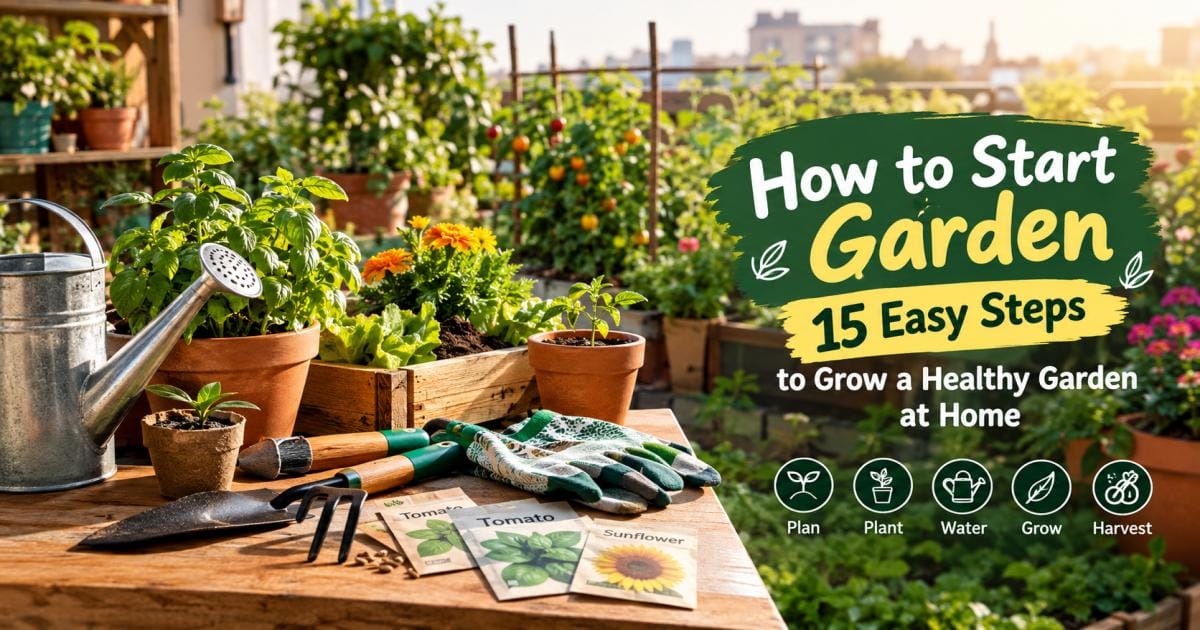

To learn how to start a garden, choose a small space with suitable sunlight and easy access to water. Pick plants that suit your local season, prepare a garden bed or containers, and follow the planting instructions. Then check soil moisture, watch for pests, and harvest crops when they are ready.
Start with a few plants rather than a long shopping list. University of Maryland Extension suggests a starter vegetable garden of about 25–50 square feet, or 2.3–4.6 square metres. You can begin with less: a few well-chosen pots can provide room for herbs, greens, or compact vegetables.
This guide covers growing in the ground, containers, balconies, and small home spaces. It also explains how gardeners in Egypt can adapt their choices to heat, water needs, and local planting seasons.
What Is a Garden?
A garden is a space where you grow and care for plants. It can provide food, flowers, greenery, or a mix of all three. You might plant directly into the ground, build a raised bed, or arrange containers in a suitable spot.
The best type depends on what you want to grow and how much time you can spend caring for it. A small vegetable patch needs regular harvesting. A container garden needs close moisture checks. Neither requires a large yard, but both need a plan that fits your daily routine.
Want to Save This?
Bookmark this guide before visiting a nursery. Use the 15 steps as a checklist, and write down your space, sunlight, water access, and plant choices before buying supplies.
Step 1: Decide What Type of Garden You Want to Start
Choose a purpose first. That decision will narrow your plant list and help you avoid buying plants that do not fit your space.
| Garden type | Main purpose | What to check first |
| Vegetable garden | Grow food for meals | Season, sunlight, and harvest needs |
| Herb garden | Grow plants for cooking | The herbs you use and their care needs |
| Flower garden | Add blooms and colour | Sunlight and flowering season |
| Indoor garden | Grow plants inside | Available light |
| Container garden | Grow without a garden bed | Pot size, drainage, and water access |
| Small-space garden | Make use of limited room | Mature plant size and access |
Vegetables and herbs can grow in containers as well as beds. A small garden can also combine edible plants and flowers, provided each plant has enough room and suitable growing conditions.
For a first attempt, choose only a few plant types. If you rarely eat a vegetable, there is little reason to make it your main crop. Grow something you want to harvest, cook, or see in bloom.
Step 2: Choose the Best Location for Your Garden
Choose a spot with suitable light, good drainage, and easy access to water. Avoid a location that forces you to carry heavy watering cans across the house or squeeze between pots to reach a plant.
Backyard Garden vs Balcony Garden
A backyard can offer room for beds, paths, and climbing crops. A balcony usually calls for containers and careful plant selection. Both can work, but they give you different limits on root space, layout, and maintenance.
Before choosing a site, ask:
- Can I reach every plant?
- Can I water here without difficulty?
- Will mature plants block a doorway or path?
- Do nearby trees or buildings cast shade?
- Does water drain away after watering?
How Much Space Do You Need?
The 2.3–4.6-square-metre starter range is a useful planning guide, not a minimum requirement. If that feels too large, begin with a few containers. Match the garden to the time you can give it.
Convenience matters. A garden you pass each day is easier to inspect than one hidden in a distant corner. Regular visits help you catch weeds, dry soil, and pest damage early.
Step 3: Understand Your Garden’s Sunlight Requirements
Check sunlight before choosing plants. Fertiliser cannot replace the light a crop needs.
For basic planning:
- Full sun generally means at least six hours of direct sunlight.
- Partial shade means fewer hours of direct sunlight, often with shade during part of the day.
- Shade means little direct sunlight.
Use these terms as a starting point, then check the needs of each plant.
Most vegetable gardens need at least six hours of direct sun. NC State Extension recommends at least eight hours for fruiting crops such as tomatoes, cucumbers, and squash. Some leafy greens and root crops can grow with six hours, though more light may improve their growth.
How to Track Sunlight
Observe the site in the morning, around midday, and in the afternoon. Record when walls, buildings, and trees shade it. Repeat the check over more than one day rather than judging from a single sunny moment.
For example, a balcony may look bright at noon but receive only a short period of direct sun. That distinction changes which crops you should buy.
In hot regions, light and heat need separate attention. A plant may need strong light yet struggle during extreme heat. Suitable planting dates remain important even if you use shade cloth.
Step 4: Select Beginner-Friendly Plants to Grow
Choose plants that fit your sunlight, space, and season. A crop described as easy may still fail if you grow it under unsuitable conditions.
Easy Vegetables for Beginners
University of Maryland Extension lists options such as lettuce, Swiss chard, bush beans, cucumbers, peppers, and tomatoes for home vegetable gardens. Compact varieties can help where space is limited.
Radishes offer a quick introduction to sowing and harvesting. Many small garden radishes reach harvest size three to five weeks after planting under suitable conditions. They still need correct spacing and a suitable season.
Start with seedlings for crops such as tomatoes or peppers if you want to skip the early indoor seed-growing stage. Sow suitable root crops directly where they will grow.
Best Herbs for Home Gardens
Choose herbs you actually use. Basil, parsley, and coriander are possible starting points, but check each plant’s season and care needs rather than treating all herbs alike.
For example, do not assume every herb should share the same pot simply because you use them together in a meal. Choose container companions with compatible growing needs.
Low-Maintenance Flowers
Marigolds and zinnias are useful beginner choices for sunny, well-drained spaces. University of Minnesota Extension describes both as easy to grow under suitable conditions.
Plants for Egypt and Other Warm Regions
Okra, eggplant, peppers, and beans belong to the warm-season crop group. Lettuce, spinach, peas, and radishes belong to the cool-season group. This distinction helps you choose what to plant next.
Ask a reliable local nursery which varieties perform well nearby. Local advice can help you narrow broad crop choices to plants suited to your area.
Step 5: Choose Between Soil Gardening and Container Gardening
Compare the space you have with the care each method requires.
An in-ground garden gives you a flexible growing area, but the existing soil may need testing and improvement. Raised beds offer a defined layout but require materials and growing medium. Containers suit balconies and other small spaces, though they limit root room and often need more frequent watering.
Which Method Works Best for Apartments?
Containers are usually the simplest starting point when you cannot plant in the ground. Use pots large enough for the mature plants, not merely the seedlings you buy.
A small seedling does not stay small. Read its label before choosing a pot or placing it beside other plants.
Container Gardening Tips
Choose containers with drainage holes. Fill them with a growing mix intended for pots rather than ordinary garden soil. Leave access around them so you can check moisture and inspect leaves.
Do not choose a pot only for its appearance. Root space, drainage, and ease of care matter more.
Step 6: Prepare Healthy Soil for Your Garden
Prepare the root zone before planting. Roots need access to air, water, and nutrients, and soil structure affects all three. Organic matter can improve those conditions.
For an in-ground garden, a soil test can help identify pH and nutrient needs. Use the results to guide amendments rather than adding products at random. If the site has an uncertain history, ask a suitable local laboratory about contamination testing before growing food.
Add Compost and Organic Matter
University of Minnesota Extension suggests incorporating roughly 2.5–5 centimetres of compost into the upper 15–20 centimetres of soil for flowers and vegetables. Adjust that advice to your soil condition and test results.
Compost can help soil hold water and nutrients, but repeated heavy additions can cause nutrient buildup. More compost does not always mean healthier plants.
Check Drainage
Watch the site after rain or watering. If water remains on the surface, address drainage before planting. A suitable raised bed or container system may offer a better option than a poorly drained patch.
Step 7: Gather Essential Gardening Tools and Supplies
Buy tools for the garden you are starting, not the garden you might build years later.
A basic kit can include:
- A hand trowel.
- Gardening gloves.
- A watering can or hose.
- A tape measure.
- Plant labels.
- Clean cutting tools.
- Pots and potting mix, if needed.
A few hand tools can handle much of the work in a small garden. Add larger tools only when your growing area requires them.
Seeds vs Seedlings
Seeds generally cost less and give you more variety. Seedlings cost more but can simplify the start for crops such as tomatoes and peppers. Root crops, including radishes and carrots, are generally better sown directly.
Do You Need Fertiliser Immediately?
Not always. Check your soil test or potting mix label first. Some mixes already contain fertiliser, and garden soil may not need the product you planned to buy. Let the growing conditions guide the purchase.
Step 8: Plan Your Garden Layout Before Planting
Draw a simple layout showing beds, pots, paths, and supports. It does not need to look polished; it needs to help you reach and care for every plant.
Use the mature plant spacing on the seed packet or label. Small seedlings can tempt you to squeeze too many into one bed, but their roots and leaves will need more room as they grow.
Keep paths clear and consider the shadows cast by tall plants and trellises. Position supports according to your site’s sunlight rather than following a fixed direction that may not suit the space.
Companion Planting Ideas
Useful plant combinations can save space. One example is growing a short-season crop in an area that a slower crop will need later. Flowering plants can also support pollinators and other helpful insects.
Do not treat companion planting as a guarantee against pests. Good spacing, suitable watering, and regular inspection still matter.
For a small starter garden, a clear layout often helps more than a long list of supposed plant partnerships.
Step 9: Plant Seeds or Seedlings Correctly
Read the planting instructions before opening the seed packet. Depth and spacing affect whether seeds emerge and how well plants grow.
How Deep Should You Plant Seeds?
Follow the packet first. A common guide is to plant a seed about two to three times as deep as its width, but some seeds need light to germinate and should not follow that rule.
Water gently after sowing. Keep the seedbed moist during germination without washing seeds out of place.
Give Seedlings Enough Space
Thin crowded seedlings when the instructions require it. Radishes, for example, need enough room for their roots to develop properly. Keeping every seedling can leave you with a weaker crop.
Transplant With Care
Gradually expose protected seedlings to outdoor conditions before planting them outside. Most transplants should grow at the same soil depth as they did in their original containers. Tomatoes are a common exception and can be planted somewhat deeper.
Water after transplanting and check the plants closely while they settle in.
Step 10: Learn Proper Watering Techniques
Water according to the plant and growing conditions, not a fixed daily rule.
Temperature, rainfall, soil type, container size, and plant growth all affect water needs. Containers often dry faster than garden beds, especially as plants become larger.
How Often Should You Water?
Check soil moisture before watering. Newly sown seeds need moisture near the surface, while established plants need water to reach their root zone. Avoid keeping the growing medium constantly muddy.
For many in-ground vegetables, about 25 millimetres of water per week, including rain, serves as a general starting point. It is not a fixed target for containers or every hot-weather situation.
Signs of Watering Problems
Both drought and excess water can harm plants. A wilted plant does not automatically need more water. Check the soil and drainage before deciding what to do.
Best Time to Water
Early morning is a useful watering time. Direct water toward the soil rather than repeatedly wetting leaves. Drip irrigation or a soaker hose can help deliver water to the root area.
Step 11: Use Fertilisers and Compost for Healthy Growth
Compost improves soil and supplies some nutrients. Fertiliser supplies nutrients in amounts that depend on the product. They serve related purposes, but they are not interchangeable.
Organic vs Mineral Fertilisers
Both types can supply plant nutrients. Choose based on the garden’s needs and follow the label. Neither type gives you a reason to ignore application rates.
When Do Plants Need Extra Nutrients?
Use soil test results, crop needs, and product instructions. Long-season crops such as tomatoes may need feeding during growth, but yellow leaves alone do not prove a nutrient shortage.
Too much fertiliser can encourage leafy growth at the expense of flowers or fruit. Avoid feeding a struggling plant before checking its water, light, and root conditions.
Simple Composting Advice
Use finished compost rather than treating fresh scraps as a ready-to-use soil amendment. If you have little space or time to learn composting, buying finished compost can simplify the first season. Apply it in suitable amounts; excess compost can create problems.
Step 12: Protect Your Garden From Pests and Diseases
Inspect plants before reaching for a treatment. A few damaged leaves do not always justify spraying the whole garden.
Look beneath leaves and around new growth. Check for insects, eggs, holes, spots, and changes that spread from one plant to another. Regular inspection helps you identify problems early.
Prevent Problems First
Choose healthy plants and suitable disease-resistant varieties where available. Space them correctly, water the root area, and remove diseased material promptly.
Start With Low-Risk Controls
Identify the insect before removing it. Ladybirds and other beneficial insects can help your garden, so treating every insect as a pest can work against you. Remove visible pests by hand where practical.
If treatment becomes necessary, select a product approved for the crop and follow its instructions. Do not use a pesticide simply because it carries a “natural” label.
Step 13: Maintain Your Garden Regularly
Visit the garden every day or two when possible. Check moisture, look for new damage, and harvest crops that are ready. Short visits help you avoid a large backlog of work.
Weeding
Remove weeds while they are small and before they set seed. That makes the job easier and reduces future weed growth.
Pruning
Learn the needs of each plant before cutting it. Do not remove healthy growth simply because another crop needs pruning.
Mulching
A suitable mulch helps retain moisture, limit weeds, and reduce erosion. NC State Extension suggests about 2.5–5 centimetres of loose, weed-free mulch for vegetable gardens.
Checking Plant Health
Look at the whole plant rather than one imperfect leaf. Notice whether new growth looks healthy and whether damage continues to spread. Minor flaws do not always require action.
Step 14: Harvest and Enjoy What You Grow
Check the seed packet or plant label for harvest guidance, then inspect the crop itself. A stated harvest date is a guide, not a promise.
Once they begin producing, crops such as okra, beans, cucumbers, and summer squash may need picking every few days. Regular harvesting helps you catch them before they pass their best eating stage.
Use a gentle method. Cut stems where needed rather than pulling hard enough to damage the plant. Learn the correct harvesting method for each herb or vegetable.
Radishes give beginners a useful early example: wide small varieties reach harvest size in three to five weeks under suitable conditions. Check their size rather than leaving them in the ground simply to grow bigger.
Saving Seeds for Future Planting
Treat seed saving as a separate skill. Keep the variety names and packets from plants you enjoy. Before saving seeds, check the crop’s requirements and whether that variety suits the method.
You do not need to save seeds to make your first garden worthwhile.
Step 15: Learn From Your Garden and Improve Each Season
Keep a short garden record. Note what you planted, where it grew, when you watered or fed it, and what you harvested.
Useful details include:
- Plant and variety name.
- Sowing or transplanting date.
- Location and sunlight.
- Pest or weather problems.
- Harvest date.
- Changes you would make next time.
A garden journal and dated photos can help you compare results between seasons.
If a crop fails, change the likely cause rather than repeating the same setup. Check whether the season, light, pot size, or moisture conditions were unsuitable.
Expand only when your current garden feels manageable. The 2.3–4.6-square-metre starter range remains useful here: it gives you room to learn without making size your main goal.
Common Mistakes Beginners Make When Starting a Garden
Starting Too Large
A large planting area creates more watering, weeding, and harvesting work. Start small enough to maintain consistently.
Choosing Unsuitable Plants
Match the crop to the season and site. A vegetable that grows easily in another region may struggle in your light or temperature conditions.
Following Poor Watering Habits
Do not water every pot and bed on the same schedule. Seedbeds, mature crops, and containers can need different care. Check moisture before acting.
Ignoring Sunlight and Soil Quality
Choose the site and prepare the growing medium before buying extra products. Unsuitable light and poor drainage can limit growth even when you add fertiliser.
Expecting Perfect Results
Weather and pests affect experienced gardeners too. Record what happened and make a specific change next season instead of abandoning the whole garden.
How to Start a Garden in Egypt: Climate-Specific Tips
In Egypt, plan around heat, water access, and local planting conditions. Egypt’s National Water Research Center identifies efficient water use and drainage as important agricultural concerns.
Do not copy planting dates from a guide written for a different climate. FAO organises crop calendar advice by crop and agroecological zone, reflecting the need for location-specific timing.
Best Plants for Hot Climates
Consider warm-season crops such as okra, eggplant, peppers, and beans when conditions suit them. Reserve suitable cooler periods for crops such as lettuce, spinach, peas, and radishes.
Warm-season plants are not heat-proof. Egyptian agricultural guidance has stressed adjusting planting dates to avoid extreme heat and adapting irrigation during heat waves.
Water-Saving Gardening Methods
Water the root area, use suitable mulch, and consider drip irrigation. Check exposed containers frequently during hot weather rather than assuming a weekly schedule will meet their needs.
Keep drainage working. Saving water does not mean leaving roots in waterlogged soil.
Best Planting Seasons
Use cool-season and warm-season crop groups as your first planning filter. Then confirm local planting windows with a reliable nursery or agricultural adviser. Treat dates as guides that may need adjustment during unusual weather.
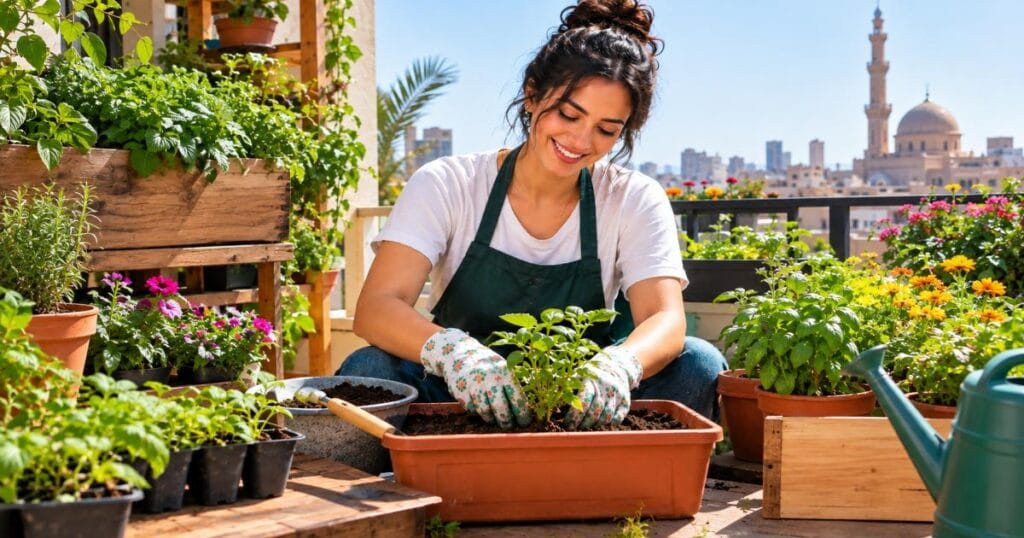
Balcony and Rooftop Gardening Ideas
Containers offer a practical way to grow without ground-level land. Cairo has hosted rooftop micro-garden projects developed with Egypt’s Central Laboratory for Agricultural Climate, providing a local example of urban food growing.
Start with a manageable setup rather than filling the whole roof. Before installing heavy pots or beds, ask a qualified professional to check load capacity, waterproofing, drainage, and safe access.
Plan water access and heat protection before placing plants in an exposed rooftop space.
Conclusion
Begin with a purpose, a suitable location, and a few plants that fit the season. Check sunlight, choose beds or containers, prepare the growing medium, and plant at the recommended depth and spacing. Then manage water and nutrients, inspect plant health, maintain the space, and harvest on time. Keep notes so the next season builds on what you learned.
Your first garden does not need to be large. It needs to be small enough to care for and useful enough that you want to return to it. A few healthy plants provide a better foundation than a crowded space you cannot maintain.
FAQs
How Much Space Do I Need to Start a Garden?
A few containers can be enough. For a starter vegetable bed, about 2.3–4.6 square metres is a useful guide. Choose an area you can water, weed, and harvest comfortably.
What Is the Easiest Plant to Grow for Beginners?
No plant is easiest in every setting. Radishes offer a quick crop in suitable cool conditions. Marigolds are an easy flower option for sunny, well-drained spaces. Choose according to your season and site.
How Much Sunlight Does a Garden Need?
Most vegetable gardens need at least six hours of direct sun. Fruiting crops such as tomatoes and cucumbers often perform better with eight or more hours. Check each plant’s needs before buying it.
Can I Start a Garden Without a Backyard?
Yes. Containers can support vegetables and herbs on suitable balconies or other small spaces. Provide enough root room, drainage, light, and water access.
How Long Does It Take to Grow Plants From Seeds?
Germination and harvest are different stages. Under suitable conditions, zinnias may sprout in about four to eight days. Small garden radishes often reach harvest in three to five weeks. Other plants take longer, so check the packet for crop-specific guidance.