
A nosebleed can interrupt your day in seconds. Blood lands on your shirt, your keyboard, or your child’s school uniform, and panic kicks in. Stay calm. Most nosebleeds stop within 15 minutes with simple first aid.
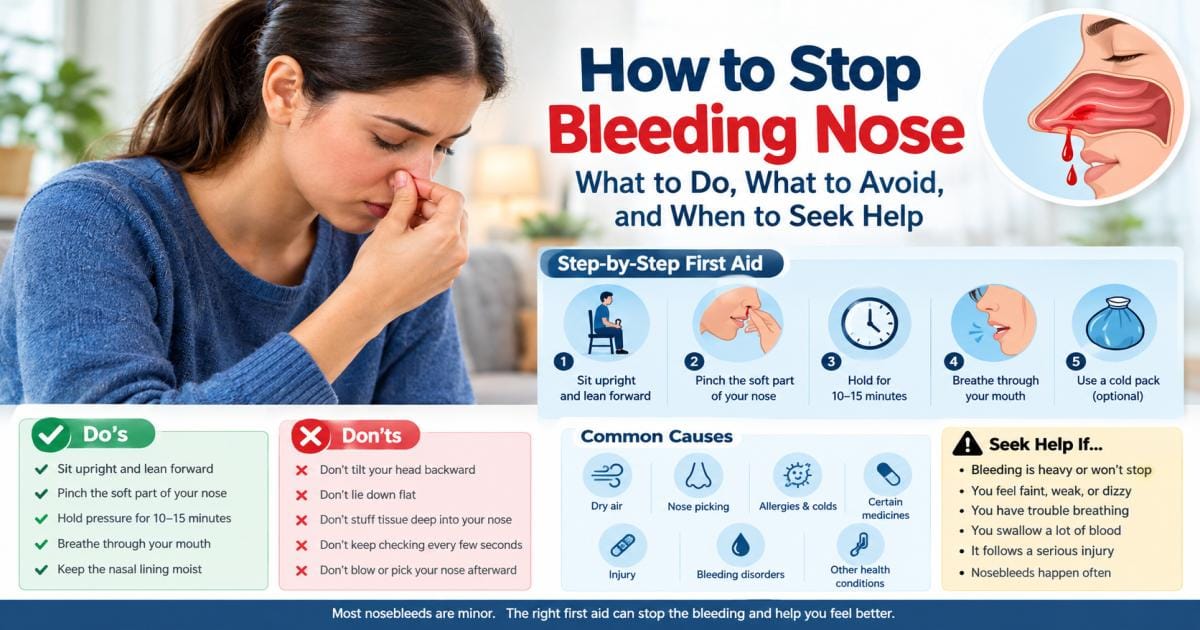
How to stop Bleeding nose, in short: Sit up and lean slightly forward. Pinch the soft part of your nose, just below the bony bridge. Hold it firmly for 10 to 15 minutes without letting go. Breathe through your mouth. If the blood still flows after 20 minutes, get medical help.
That one paragraph solves most cases. The details below matter, because small mistakes can turn a 10-minute problem into a 40-minute one. Tilting your head back and peeking too early are the two biggest.
You are in good company. Studies typically estimate that about 60% of people have at least one nosebleed in their life, and only about 6% need to see a doctor. In Egypt, desert air, dust, and nonstop air conditioning leave the nose lining dry and fragile, so a nosebleed can show up more than once.
This guide covers what to do, what to avoid, why nosebleeds happen, how to prevent them, and when to see a doctor.
This guide shares general health information. It does not replace advice from a doctor who knows your health history.
What Is a Nosebleed (Epistaxis)?
A nosebleed, or epistaxis, is bleeding from the lining inside your nose. It starts when a small blood vessel there breaks.
Your nose holds many thin vessels close to the surface. They warm and moisten the air you breathe. Near the front of the wall between your nostrils, several of these vessels meet in one spot, known as Kiesselbach’s plexus. It faces the incoming air and is easy to scratch, so it causes most nosebleeds.
Doctors sort nosebleeds into two types:
- Anterior nosebleeds start at the front of the nose. They make up about 90% of cases. Blood comes out of one nostril, usually while you sit or stand. Most are easy to treat at home.
- Posterior nosebleeds start deeper, near the back of the nose. They are rare, heavier, and more likely in older adults, people with high blood pressure, or after a facial injury. Blood often runs down the throat. These need a doctor.
Age matters too. Nosebleeds typically peak in two groups: children between 2 and 10, and adults over 50. Thin nose lining and busy fingers explain the first group. Fragile vessels, blood-thinning medicines, and high blood pressure play a part in the second.
Here is a quick check. If blood keeps running down your throat while you lean forward, or flows steadily from both nostrils, treat it as serious.
How to Stop Bleeding Nose: Step-by-Step First Aid
Short answer: Sit up, lean forward, pinch the soft part of your nose for 10 to 15 minutes, and breathe through your mouth. Most first-aid guides, including the UK’s NHS, give this same timing.
Picture this. You are at your desk in Cairo, and your nose starts to drip. Don’t rush to the sink with your head back. Do this instead:
- Sit down and lean slightly forward. Keep your head above your heart. Leaning forward lets blood drip out of your nose instead of down your throat, where it can make you gag or vomit.
- Pinch the soft part of your nose. Use your thumb and index finger. Squeeze the hard bone below and close both nostrils. Many people pinch the bony bridge, and that does nothing.
- Breathe through your mouth. Slow, even breaths keep your heart rate down, which helps the bleeding slow. Spit out any blood that collects in your mouth.
- Set a timer for 10 to 15 minutes. Hold the pressure the whole time. Every early peek can break the soft clot that is forming.
- Add a cold pack if you have one. Place a cloth-wrapped ice pack on the bridge of your nose or on your cheeks. Evidence for this step is limited, but it is harmless, and many people find it helps.
- Release slowly. When the timer ends, let go gently. If the blood still flows, pinch again for another 10 to 15 minutes.
- Get help if it continues. If the nose still bleeds after about 20 minutes in total, go to an emergency room. Ask someone else to drive. Keep leaning forward and pinching on the way.
What to do after the bleeding stops
The clot stays fragile for hours. For the next 24 hours:
- Don’t blow, pick, or rub your nose.
- Skip heavy lifting, hard exercise, hot drinks, and hot showers for several hours. Heat widens blood vessels.
- Sleep with your head raised on an extra pillow.
- Dab a thin layer of petroleum jelly just inside the nostril, or use a saline spray. Most pharmacies in Egypt stock both.
What Not to Do During a Nosebleed
Short answer: Don’t tilt your head back, don’t lie down, don’t stuff your nose deep with tissue, and don’t let go early. Each one can make the bleeding last longer.
Some habits feel natural but work against you:
- Don’t tilt your head back. Blood slides down your throat. You may cough, gag, or vomit, and you can’t tell how much blood you are losing.
- Don’t lie flat. Lying down raises pressure in the blood vessels of your head. Stay seated.
- Don’t push tissue or cotton deep into your nose. It can stick to the clot, and it pulls the clot loose when you remove it. Hold a tissue under your nose to catch drips instead.
- Don’t pinch the bony bridge. The pressure must go on the soft part below it.
- Don’t let go to check. Even a quick look can restart the flow.
- Don’t blow your nose for 24 hours. Hard blowing is a top reason nosebleeds come back.
- Don’t take aspirin or ibuprofen unless a doctor told you to. Both can slow clotting. Paracetamol is a safer pain reliever for most adults.
You may also hear old tricks, such as dropping a cold key down the back or sniffing strong smells. No solid evidence supports them. Steady pressure does the real work.
Common Causes of Nosebleeds
Short answer: Dry air is the most common cause of nosebleeds. Nose picking, colds, allergies, injuries, and blood-thinning medicines come next.
Causes in and around the nose
Dry air. When the air is dry, the nose lining loses moisture, cracks, and bleeds. Egypt is a clear example. Low humidity, hot summers, dusty spring winds, and air conditioners that run all day can all dry out the nose. In colder countries, indoor heating does the same thing.
Nose picking. Fingernails scratch the lining and tear small vessels. This is especially common in children.
Colds, allergies, and sinus infections. A blocked, sore nose leads to a lot of blowing and rubbing. The lining swells, cracks, and bleeds.
Nasal sprays. Steroid and decongestant sprays can dry the nose if you use them for a long time or aim them at the middle wall. Point the nozzle toward the outer corner of your eye instead.
Injury. A fall, a sports hit, or a knock to the face can cause bleeding. A broken nose or a blow to the head needs a medical check, even if the bleeding stops.
Objects stuck in the nose. Small children sometimes push beads, paper, or food into a nostril. Bleeding from one side with a bad smell is a clue.
A bent nasal wall (deviated septum). A crooked wall changes how air flows. One side may dry out more and bleed again and again.
Smoke and irritants. Cigarette smoke, shisha smoke, strong chemicals, and heavy dust all irritate the lining. Anyone who works around cement dust or fumes should wear a mask.
Causes that involve the whole body
Blood-thinning medicines. Warfarin, clopidogrel, and aspirin make it harder for blood to clot. Ibuprofen can have a mild effect too. If you take any of these and get frequent nosebleeds, talk to your doctor. Never stop a prescribed medicine on your own.
High blood pressure. It doesn’t usually cause a nosebleed by itself, but it can make a bleed heavier and harder to stop. If you get repeat bleeds, especially after 40, get your pressure checked.
Bleeding disorders. Conditions such as hemophilia and von Willebrand disease make blood clot slowly. Easy bruising, bleeding gums, and very heavy periods are other warning signs.
Rare causes. These include a genetic condition called hereditary hemorrhagic telangiectasia, nasal growths, and sniffing drugs through the nose. They are uncommon, but they explain why repeat bleeds from one side deserve a doctor’s visit.
How to Prevent Nosebleeds From Happening Again
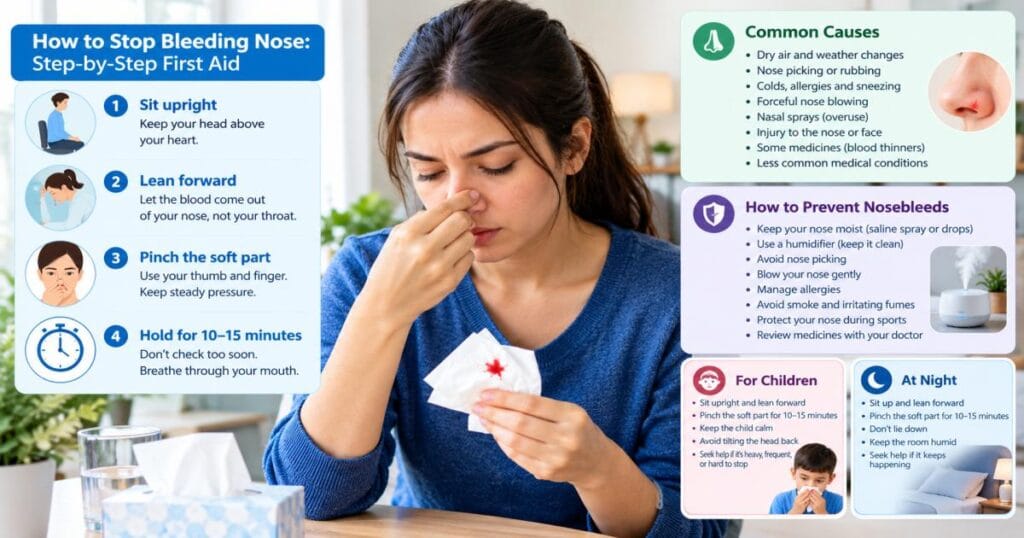
Short answer: Keep your nose moist, stop picking, blow gently, and treat colds and allergies early. These habits prevent most dry-air nosebleeds.
- Add moisture to the air. Run a cool-mist humidifier in your bedroom. Many health bodies suggest keeping indoor humidity between 30% and 50%. This matters most in the Egyptian summer, when fans and air conditioners dry the room.
- Use saline spray or gel. A gentle saltwater mist two or three times a day keeps the lining soft. Saline gel before bed works well for very dry noses.
- Apply a thin layer of petroleum jelly. Use a clean fingertip and dab a small amount just inside each nostril at night.
- Stop picking. Keep nails short and smooth. If picking is a habit, give your hands another job, like holding a stress ball.
- Blow gently. Close one nostril and blow softly through the other.
- Sneeze with your mouth open. This lowers the pressure inside your nose.
- Drink enough water. Your nose lining needs moisture from the inside too. You lose more water in hot weather, so drink more.
- Treat allergies and colds early. A blocked, itchy nose leads to rubbing and blowing. Ask a pharmacist or doctor about allergy medicine if you need it.
- Quit smoking. This includes cigarettes and shisha. Smoke dries and damages the lining over time.
- Wear a mask in dusty places. Sandstorm days and building sites are the usual culprits.
- Use nasal sprays correctly. Follow the label. Don’t use a decongestant spray for more than three days in a row.
How to Stop a Nosebleed in Children
Short answer: Sit your child upright, lean them forward, pinch the soft part of the nose for 10 to 15 minutes, and keep them calm. Most childhood nosebleeds are harmless.
Children get nosebleeds often, especially between ages 2 and 10. Dry air, nose picking, and colds are the usual reasons. A child’s nose lining is thin, and small fingers find their way inside.
Your calm voice helps as much as the first aid. A scared child cries and breathes hard, and that can keep the bleeding going. Tell your child it will stop soon, then:
- Sit your child on your lap or in a chair, leaning forward.
- Pinch the soft part of the nose. If your child is too young, hold it for them.
- Ask them to breathe through the mouth.
- Hold for 10 to 15 minutes by the clock.
- Let them rest quietly afterward. Skip rough play for the rest of the day.
To prevent the next one, trim your child’s nails, teach gentle nose blowing, and use saline spray if the nose looks dry. Never give aspirin to a child. It can cause a rare but serious illness called Reye’s syndrome.
See a doctor if:
- The bleeding lasts more than 15 to 20 minutes.
- It followed a fall or a hit to the head or face.
- Your child is under 2 years old. Nosebleeds are unusual at that age.
- Blood comes from one nostril along with a bad smell or discharge. Something may be stuck inside.
- Nosebleeds happen often, or your child bruises easily.
How to Stop a Nosebleed at Night
Short answer: Sit up, lean forward over a towel or bowl, and pinch the soft part of your nose for 10 to 15 minutes. Don’t lie back down until the bleeding stops.
Night nosebleeds are common because your nose dries out as you sleep. Many people only notice when they taste blood or see a stain on the pillow.
If it happens:
- Sit up in bed or move to a chair.
- Lean forward over a bowl or an old towel.
- Pinch the soft part of your nose and hold for 10 to 15 minutes.
- Breathe through your mouth.
- When the bleeding stops, sit quietly for a few minutes before you go back to bed.
Then sleep with your head propped on two pillows. Put a dark cloth over your pillow in case it starts again.
To lower the chance of night bleeds, run a humidifier, put a little saline gel or petroleum jelly inside your nostrils before sleep, and don’t point a fan or air conditioner straight at your face. A fan blowing across your bed all night is a common cause in Egyptian homes during summer.
One more point. If you swallowed blood in your sleep, you may vomit something dark or pass dark stool the next day. This is usually old blood from the stomach and not a danger. If it keeps happening, or you feel unwell, see a doctor.
When Is a Nosebleed an Emergency?
Short answer: A nosebleed is an emergency if it lasts more than 20 minutes with firm pressure, flows heavily, follows a head or face injury, or comes with dizziness or trouble breathing.
Go to the nearest emergency room or call an ambulance if you notice any of these:
- Bleeding that doesn’t stop after 20 minutes of steady pressure
- A heavy flow, or blood pouring down your throat
- A nosebleed after a car crash, a fall, or a blow to the head or face
- A nose that looks bent or may be broken
- Dizziness, weakness, fainting, or pale skin
- A racing heart or trouble breathing
- Vomiting a lot of blood
- Trouble stopping the bleeding while you take blood thinners
- A nosebleed soon after nose or sinus surgery
In Egypt, call 123 for an ambulance. Other common numbers are 911 in the US, 999 in the UK, and 112 in the EU.
While you wait, stay seated, lean forward, and keep pinching. Don’t eat or drink, in case you need treatment.
When Should You See a Doctor for Frequent Nosebleeds?
Short answer: See a doctor if nosebleeds come back often, such as more than once a week, last longer than 10 minutes, or start for the first time after age 50.
One nosebleed during a dry week is rarely a worry. A pattern is different. Book a visit if:
- Nosebleeds keep returning despite saline spray and a humidifier.
- They always come from the same nostril.
- You also bruise easily, bleed from your gums, or have very heavy periods.
- You take blood thinners.
- Bleeding disorders run in your family.
- One side of your nose stays blocked.
- You feel tired or look pale. Repeated blood loss can lower your iron.
Start with a family doctor. Depending on what they find, they may send you to an ear, nose, and throat (ENT) specialist.
Before the visit, keep a simple note on your phone for a few weeks. Write the date, the time, which nostril bled, and what you were doing. Bring a list of every medicine you take, including pain relievers and herbal products. These details help your doctor find the cause faster.
How Doctors Treat Persistent or Recurrent Nosebleeds
Short answer: Doctors find the bleeding spot, seal it with cautery or pack the nose, and treat the cause behind the bleeding.
When home care isn’t enough, you have several options. The right one depends on where the blood comes from and why.
Finding the source. The doctor looks inside your nose with a light and a small tool. Sometimes they use a thin camera called an endoscope. They also check your blood pressure.
Blood tests. If you bleed often, a complete blood count checks your red blood cells and platelets. Clotting tests show how well your blood forms clots.
Cautery. If the doctor can see the bleeding vessel, they can seal it. After numbing the nose, they touch the spot with a chemical called silver nitrate or use a small heat tool. The process typically takes a few minutes.
Nasal packing. For heavy or hard-to-find bleeding, the doctor may place gauze, foam, or a small balloon inside the nose to press on the spot. Some types dissolve on their own. Others stay in for a day or two, and a doctor removes them. It feels uncomfortable, but it works.
Medicines. Your doctor may prescribe a healing ointment. Some people receive a medicine that helps blood clot, given on a pad in the nose or by mouth. If one of your own medicines adds to the problem, the doctor may change the dose or switch it. Don’t make that change yourself.
Treating the cause. If allergies, a sinus infection, or high blood pressure drive the bleeding, treating those usually helps. A small surgery to straighten a bent septum can help too.
Procedures for severe bleeds. In rare cases, a deep bleed doesn’t respond to anything else. Doctors can tie off or block the blood vessel that feeds the area. This takes place in a hospital and is typically a last step.
Most people with repeat nosebleeds improve once the cause is found. You don’t have to live with them.
Conclusion
You now know how to stop a bleeding nose the right way: sit up, lean forward, pinch the soft part, and hold for 10 to 15 minutes. Leave out the old tricks. Tilting your head back or stuffing your nose with tissue does more harm than good.
Most nosebleeds are harmless and come from dry air or small irritation. In Egypt’s dry, dusty climate, a few daily habits make a real difference. Use saline spray, drink plenty of water, keep your nails short, and add moisture to the bedroom air.
Also learn the warning signs. Bleeding that lasts over 20 minutes, a heavy flow, an injury, dizziness, or frequent repeat bleeds all call for a doctor.
Save this guide and share it with your family. The next time a nosebleed starts, you will know exactly what to do.
FAQs
How long should you pinch your nose during a nosebleed?
Pinch the soft part of your nose for 10 to 15 minutes without letting go. Use a timer. Letting go early is the main reason nosebleeds restart. If the bleeding continues, pinch for another 10 to 15 minutes. If it still hasn’t stopped after about 20 minutes in total, get medical help.
Should you lean forward or backward during a nosebleed?
Lean forward. Sit up, tilt your head slightly toward your chest, and let the blood drip out of your nose. Leaning back sends blood down your throat, which can make you gag, cough, or vomit. It also hides how much blood you are losing.
Can you stop a nosebleed quickly at home?
Yes, in most cases. Sit up, lean forward, and pinch the soft part of your nose for 10 to 15 minutes. That stops the large majority of nosebleeds. A cold pack on the nose or cheeks may help. If the bleeding lasts beyond 20 minutes, you need a doctor.
Why do I keep getting nosebleeds?
Dry air, nose picking, allergies, colds, and overused nasal sprays are the most common reasons. Blood thinners, high blood pressure, a bent nasal wall, and bleeding disorders can also play a part. If nosebleeds keep coming back, a doctor can examine your nose and run simple tests to find the cause.
Can dry air cause nosebleeds?
Yes. Dry air is the top cause. It dries the nose lining until it cracks and bleeds. Hot desert weather, dusty winds, air conditioning, and indoor heating can all do this. A humidifier, saline spray, and a thin layer of petroleum jelly inside the nostrils protect your nose.
When should I go to the emergency room for a nosebleed?
Go if the bleeding lasts more than 20 minutes with firm pressure, flows heavily, or follows a head or face injury. Go too if you feel faint or short of breath, vomit a lot of blood, or can’t stop the bleed while taking blood thinners. In Egypt, call 123.
Are frequent nosebleeds a sign of something serious?
Usually not. Most frequent nosebleeds come from dryness or irritation. Sometimes they point to high blood pressure, a clotting problem, or a medicine side effect. Rarely, they signal a growth in the nose. See a doctor if you get nosebleeds more than once a week, or if they start after age 50.
What should you avoid after a nosebleed?
For at least 24 hours, avoid blowing or picking your nose, heavy lifting, hard exercise, hot drinks, and hot showers. Skip aspirin and ibuprofen unless a doctor told you to take them. Keep your head raised when you rest, and keep the inside of your nose moist with saline spray or petroleum jelly.