
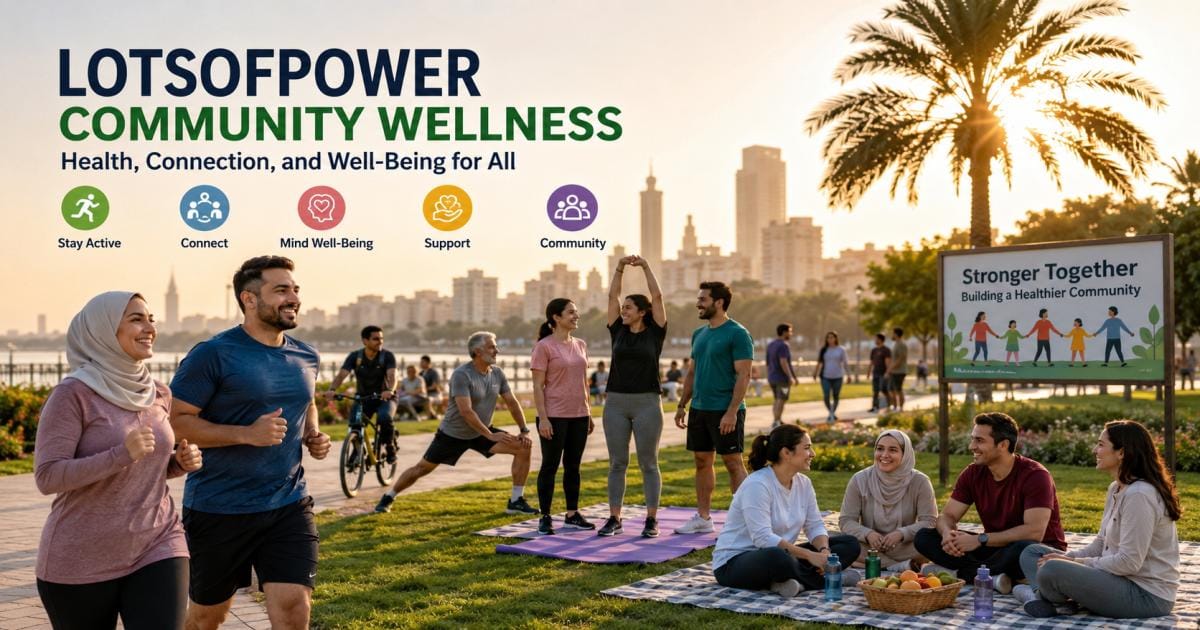

Lotsofpower community wellness is an approach to health that puts people, not just habits, at the center. Instead of asking you to fix your body and mind alone, it links daily wellness choices to the people around you: neighbors, friends, coworkers, and family.
What does that look like in practice? This guide walks through it step by step: the core pillars of a community-based wellness routine, real activities you can start this week, a 30-day plan, and honest answers to common questions. Every section stays practical, because a guide only helps if you can act on it.
Health habits stick better when someone notices if you skip them. Connection also works the other way: showing up for a walking group or a weekend cleanup often improves your mood before it improves your waistline. In short, LotsofPower community wellness treats health as something you build with others, not something you white-knuckle through by yourself.
What Is LotsofPower Community Wellness?
LotsofPower community wellness describes a style of well-being that combines personal health habits with group support. Rather than one program with a single rulebook, it works as a framework: pick habits that matter to your body and mind, then practice them alongside a community that keeps you accountable.
The idea builds on a simple observation. People who feel connected to others tend to stick with healthy routines longer than people who try to change everything solo. A community adds structure, encouragement, and a reason to show up on the days motivation runs low.
Three elements generally work together in this model: physical health (movement, sleep, nutrition), emotional health (stress management, mood, resilience), and social connection (belonging, shared activity, mutual support). None of the three individuals contributes significantly on their own. Movement without rest burns people out. Connection without any health focus is just socializing. Combine all three, and habits become easier to keep.
This approach tends to suit people who have tried solo wellness plans and lost momentum, people managing a busy schedule who want accountability built in, and people who simply feel isolated and want health goals that double as a reason to meet others.
How Does LotsofPower Community Wellness Work?
In practice, LotsofPower Community Wellness runs on a handful of repeatable ideas rather than one fixed method.
Building healthier daily habits. Small, repeatable actions—an earlier bedtime, a short walk, a home-cooked meal—usually matter more than dramatic short-term changes. Communities help by turning private habits into shared ones, like a group that walks every morning at seven.
Encouraging social connection. Regular contact with other people, even brief contact, supports mood and reduces stress for most people. A wellness routine built around a group gives you built-in social time instead of one more task competing for your evening.
Supporting accountability and participation. Telling a friend your goal, or joining a group with a set schedule, raises the odds you follow through. This works because skipping a personal promise feels different from skipping a scheduled group session other people expect you at.
Creating sustainable rather than short-term change. Fast, intense programs often lead to burnout just as fast. Community-based wellness favors habits you can keep for years, not weeks, because the social reward keeps you coming back even when the novelty fades.
Individual wellness vs. collective wellness. Personal wellness asks, “How do I feel today?” Collective wellness asks, “How does our group support each other’s health?” Lotsofpower community wellness works at both levels at once—your personal progress and the group’s shared momentum reinforce each other.
The Core Pillars of LotsofPower Community Wellness
Physical Health and Daily Movement
Movement is the first and most visible pillar, and it does not require a gym membership. On average, health organizations recommend around 150 minutes of moderate activity per week for adults, or roughly 20 to 30 minutes most days. Walking groups, community sports leagues, and casual weekend hikes all count. The community angle matters here: people who exercise with others tend to stay consistent longer than people who exercise alone, since a scheduled group session is harder to skip than a private plan.
Mental and Emotional Well-Being
The second pillar is mental and emotional health. Stress, low mood, and anxiety tend to respond well to a mix of rest, purposeful activity, and honest conversation. Community settings offer a low-pressure way to talk about how you’re doing, whether through a structured support group or an informal chat during a group activity. Feeling heard by even one or two people in a group setting can ease emotional strain that builds up in isolation.
Social Connection and Belonging
Belonging is often the pillar people underestimate. Research on social ties consistently links strong relationships to better health outcomes and longer life expectancy, while chronic loneliness raises stress and worsens physical health. A wellness community gives people a reason to interact regularly, which builds the kind of steady connection that isolated habit-tracking cannot replace. Why does this pillar get overlooked so often? Probably because connection is harder to measure than steps or sleep hours, even though it matters just as much.
Sleep, Rest, and Recovery
The fourth pillar, sleep and recovery, is easy to neglect when a routine focuses only on activity. Most adults generally need 7 to 9 hours of sleep for the body and mind to recover. Community wellness supports this pillar less directly—by reducing stress and giving people a reason to wind down their evenings for an early group activity—but it remains just as important as movement or connection.
Why Community Connection Matters for Overall Well-Being
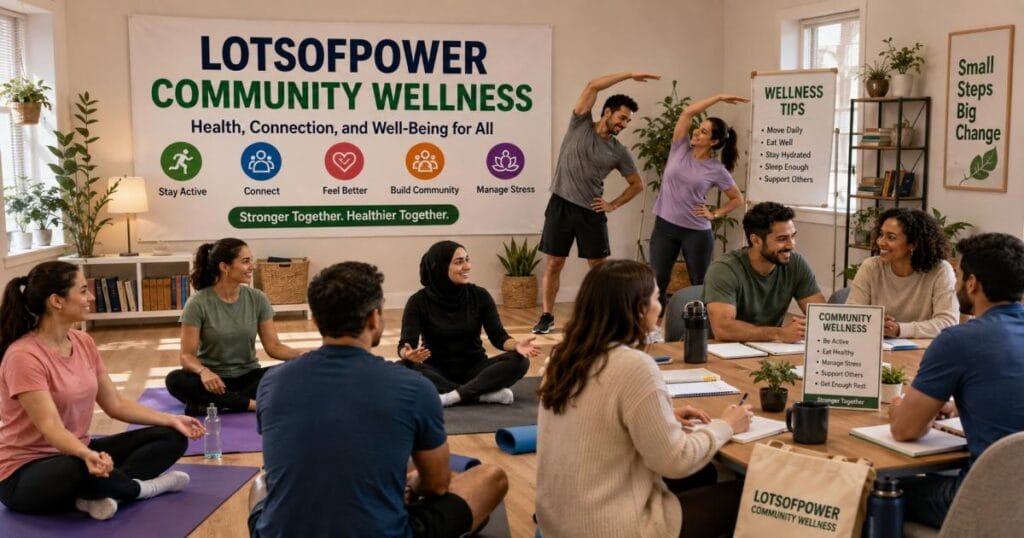
People have long treated health as a personal project: your diet, your exercise, your willpower. But social connection plays a measurable role in how healthy people actually stay. People with consistent social ties tend to report better stress management, steadier moods, and stronger immune resilience than people who feel isolated.
Supportive communities also reduce loneliness directly, simply by giving people regular contact with others who share a goal. That contact builds accountability almost as a side effect: it is harder to skip a habit when a group notices your absence. It also builds motivation, since progress feels more rewarding when someone celebrates it with you.
Belonging matters on its own, separate from any health outcome. Feeling like part of a group meets a basic human need, and wellness routines that ignore this need often fail even when the exercise or diet plan itself is sound. So why treat wellness as a purely individual responsibility? The people, environment, and support systems around a person shape health outcomes just as much as personal choices do.
Key Benefits of LotsofPower Community Wellness
Supports Mental and Emotional Wellness
Regular group activity gives people a consistent outlet for stress and a chance to talk through hard days with people who understand. Over time, this steady support can ease symptoms of low mood and anxiety for many people, alongside professional care when it is needed.
Builds Stronger Social Relationships
Shared activities create natural opportunities for friendship that do not depend on forced small talk. Walking a route together or training for a local event gives people something to talk about besides themselves, which often makes new relationships easier to start.
Promotes Motivation and Accountability
A scheduled group activity is far easier to keep than a private goal with no witnesses. Community wellness turns motivation into a shared resource: on days your own drive runs low, the group’s momentum can carry you through.
Can Strengthen Community Resilience
Neighborhoods and groups that check in on each other’s well-being generally handle stress, illness, and hard seasons more smoothly than isolated individuals. A wellness-focused community builds the kind of trust and familiarity that helps people support each other when it matters most.
Practical LotsofPower Community Wellness Activities
Group Walking and Fitness Activities
Walking groups, running clubs, and casual sports leagues are some of the easiest activities to start. They need no special equipment, welcome most fitness levels, and give people a fixed time and place to show up.
Outdoor and Nature-Based Activities
Hiking, park cleanups, and community gardening combine movement with fresh air, and outdoor group settings tend to feel less intimidating than gym environments for beginners. Time outdoors also supports mood on its own, separate from the exercise itself.
Community Events and Social Gatherings
Local health fairs, potlucks built around healthier recipes, and neighborhood fitness days give people a lower-commitment way to meet others interested in wellness before joining a more regular group.
Volunteering and Helping Others
Volunteering supports well-being in a less obvious way: helping others usually boosts a volunteer’s own mood and sense of purpose, while also building the kind of community ties that support long-term health.
How to Build a Personal Wellness Routine With a Community Approach
Start With One Small Health Goal
Pick a single habit—ten minutes of movement, one earlier bedtime, one shared meal a week—rather than overhauling your routine at once. Small goals are easier to keep, and keeping one goal builds the confidence to add a second.
Add Regular Physical Activity
Once one habit feels steady, add a simple movement goal, ideally one with a group component: a weekly walk, a local class, or a sport with a set schedule.
Improve Sleep and Recovery
Set a consistent bedtime and give yourself a wind-down window without screens. Better sleep makes every other wellness habit easier to sustain.
Make Healthier Food Choices
Small, steady changes—more vegetables, less sugary drinks, cooking one more meal at home each week—generally last longer than strict, all-or-nothing diets. Sharing meals with others also makes healthier cooking easier to keep up.
Lots of Power Community Wellness for Different Types of People
Wellness for Busy Adults
Busy schedules make brief, recurring group activities more realistic than long solo routines. A 30-minute weekly walking group fits into most calendars better than an hour-long daily gym plan.
Wellness for Families
Family wellness works best as a shared activity: cooking together, walking after dinner, or joining a family-friendly community event. Kids often pick up healthy habits faster when they see adults practicing them too.
Wellness for Older Adults
Older adults often benefit most from the connection side of community wellness, since isolation risk tends to rise with age. Gentle group activities—walking clubs, chair exercise classes, community centers—support both mobility and social contact at once.
Wellness for Beginners
New to any of this? Start with the lowest-pressure option available: a casual walking group or a single community event, rather than a demanding fitness program. Confidence builds faster from small wins than from an intense start that burns out quickly.
Lots of Power Community Wellness in Egypt and Around the World
Community-based wellness looks different depending on where you live, and that is a strength, not a limitation. In Egypt, extended family networks and close-knit neighborhoods already provide much of the social structure this approach relies on—shared meals, neighborhood mosques and churches, and local sports clubs all function as informal wellness communities, even without that label.
Adapting activities to local communities usually means working with what already exists rather than importing an unfamiliar program. A shared walk after evening prayer, a neighborhood football match, or a women’s fitness circle at a local center all fit the same core idea as a formal wellness class.
Cost matters everywhere. Affordable wellness ideas—free outdoor spaces, public parks, walking groups that need no membership fee—tend to work well across income levels and countries. Urban areas generally offer more formal options like gyms and classes, while rural communities often rely more on informal networks: farming cooperatives, religious groups, and extended family.
Cultural sensitivity matters just as much as cost. What counts as an appropriate group activity, acceptable dress for exercise, or a comfortable social setting varies by culture and by individual preference. A wellness approach that respects local norms will always outperform one that ignores them, whether the audience is in Cairo, Lagos, London, or anywhere else.
The Role of Technology in Community Wellness
Technology has made community wellness easier to access, though it works best as a support tool rather than a replacement for in-person contact.
Fitness and wellness apps help people track habits and, in many cases, connect with others working toward similar goals. Wearable devices add a layer of feedback—step counts, sleep tracking, heart rate—that can motivate consistency, though the numbers matter less than the habits behind them. Online wellness groups and virtual community events extend access to people who cannot easily attend in-person activities, including people in remote areas or with mobility limits.
These tools have real limits, too. Does a step-tracking app replace a real walking group? Usually not: screen-based connection tends to feel less satisfying than in-person contact, and constant tracking can turn a healthy habit into a source of stress for some people. Privacy is another concern worth taking seriously: wellness apps often collect sensitive health data, so checking an app’s privacy settings and only sharing personal health information with services you trust is a reasonable precaution before signing up.
How to Measure Progress in Community Wellness
Progress in community wellness shows up in more than one number. Useful markers generally include:
- Physical activity consistency — are you moving regularly, not just occasionally?
- Sleep habits — is your sleep schedule steady and restorative?
- Social participation — are you showing up to group activities regularly?
- Energy and mood — do you generally feel better day to day?
- Personal goals — are you meeting the specific targets you set for yourself?
No single number captures all of this. A step count says nothing about sleep quality, and a sleep tracker says nothing about whether you felt connected to anyone that week. Tracking a few simple markers together usually gives a clearer picture of overall well-being than chasing one metric alone.
Common Challenges in Community Wellness—and How to Overcome Them
Lack of Time
Short, recurring activities fit tight schedules better than long sessions. A 20-minute group walk twice a week beats an hour-long class you keep skipping.
Low Motivation
Motivation naturally dips over time for almost everyone. Pairing up with an accountability partner or joining a group with a fixed schedule generally helps more than relying on willpower alone.
Cost and Accessibility
Free or low-cost options exist almost everywhere: public parks, community centers, volunteer groups, and informal walking clubs. Cost should not be the reason a wellness routine never starts.
Social Anxiety or Isolation
Large groups can feel intimidating at first. Starting with a smaller group, a one-on-one activity partner, or a low-pressure event usually eases people into community wellness without forcing a big social leap on day one.
Is LotsofPower Community Wellness Right for You?
This approach tends to suit people who want structure, accountability, and social contact built into their health routine, rather than a solo plan they have to enforce on themselves. It fits particularly well for people who have struggled to stick with wellness goals alone.
Before joining any wellness community, it helps to ask a few questions: Does this group’s advice line up with well-established health guidance? Are the people leading it qualified, or at least transparent about what they are and are not trained in? Does the group pressure quick fixes, or does it encourage steady, realistic habits?
Community wellness works best as a complement to medical care, not a substitute for it. If you have an existing health condition, ongoing symptoms, or a mental health concern, talk to a doctor or qualified professional before making major changes to your activity, diet, or sleep routine. A supportive group can reinforce healthy habits, but it cannot replace individualized medical guidance.
How to Create a 30-Day Community Wellness Plan
Week 1 — Build Simple Healthy Habits
Pick one small habit and one group activity to try, such as a daily 10-minute walk and one community event. Focus on consistency over intensity.
Week 2 — Add Movement and Better Nutrition
Increase activity slightly and add one small food change, like more vegetables at dinner or one home-cooked meal replacing a fast one. Keep attending your chosen group activity.
Week 3 — Strengthen Social Connection
Add a second social touchpoint: a new group, a regular check-in with an accountability partner, or a volunteering session. Notice how connection affects your motivation this week.
Week 4 — Review Progress and Build Consistency
Look back at sleep, activity, mood, and participation from the past three weeks. Keep what worked, adjust what did not, and set one or two habits to carry forward past day 30.
Evidence, Safety, and Trust: What to Know About Wellness Advice
Wellness information and medical advice are not the same thing, and mixing them up can cause real harm. General guidance—move regularly, sleep enough, stay connected to others—applies broadly and rests on well-established research. Advice about a specific health condition, medication, or symptom needs a doctor’s input, not a wellness group’s opinion.
Credible sources matter. Look for information that comes from recognized health organizations, licensed professionals, or peer-reviewed research, and be cautious of any wellness claim that promises fast, dramatic results with no downside. Real health change is typically gradual, and claims that sound too easy usually are.
Checking qualifications is worth the extra minute. A group leader or wellness resource does not need a medical degree to offer general encouragement and activity, but anyone giving specific health, nutrition, or mental health advice should be transparent about their training. When in doubt, or when a symptom feels serious, speak with a doctor or qualified health professional rather than relying on group advice alone.
FAQs
What is lotsofpower community wellness?
It is an approach to health that combines personal wellness habits—movement, sleep, nutrition, mental health—with social connection and group support, rather than treating health as a solo project.
What are the main goals of community wellness?
The main goals are building sustainable healthy habits, strengthening social connection, and creating accountability that helps people stick with wellness routines longer than they usually would alone.
How does community wellness improve overall well-being?
It combines physical activity, emotional support, and social belonging, three factors that research consistently links to better health outcomes when they work together rather than separately.
What activities can be part of a community wellness program?
Common activities include group walking or fitness sessions, outdoor and nature-based events, community gatherings, and volunteering, all of which combine health benefits with social contact.
Is community wellness suitable for beginners?
Yes. Beginners typically do best starting with low-pressure options, such as a casual walking group or a single community event, rather than an intense program from day one.
Can community wellness help with mental well-being?
It can support mental well-being by reducing isolation, offering regular social contact, and creating a sense of belonging, though it works best alongside professional care for diagnosed mental health conditions.
How can I start a community wellness routine?
Start with one small habit and one low-commitment group activity, then add movement, nutrition changes, and additional social connection gradually over the following weeks.
Final Thoughts
Health, connection, and well-being work better together than apart. Lotsofpower community wellness brings these three elements into one practical approach: build small, sustainable habits, move regularly, protect your sleep, and do it alongside people who notice when you show up.
Sustainable habits beat quick fixes almost every time, because a routine you can keep for a year will always outperform one you abandon after two weeks. If you are starting today, pick one small step—a short walk, a single group activity, one earlier bedtime—and build from there.
Whatever wellness information you follow, check that it comes from credible, evidence-based sources, and treat any community group as a support system alongside professional medical care, not a replacement for it.

[…] guide shares general health information. It does not replace advice from a doctor who knows your health […]