

Medical Disclaimer: This article is for informational purposes only and is not intended as medical advice. Always consult with a qualified healthcare professional before beginning any new exercise regimen, especially if you have a history of fractures or bone density issues.
Bones are living, active tissues that constantly break down and rebuild. Most people reach their peak bone mass by age 30. After that, the body naturally begins to lose bone density. If you want to slow this process, protect your skeleton, and prevent fractures, physical movement is your most effective tool.
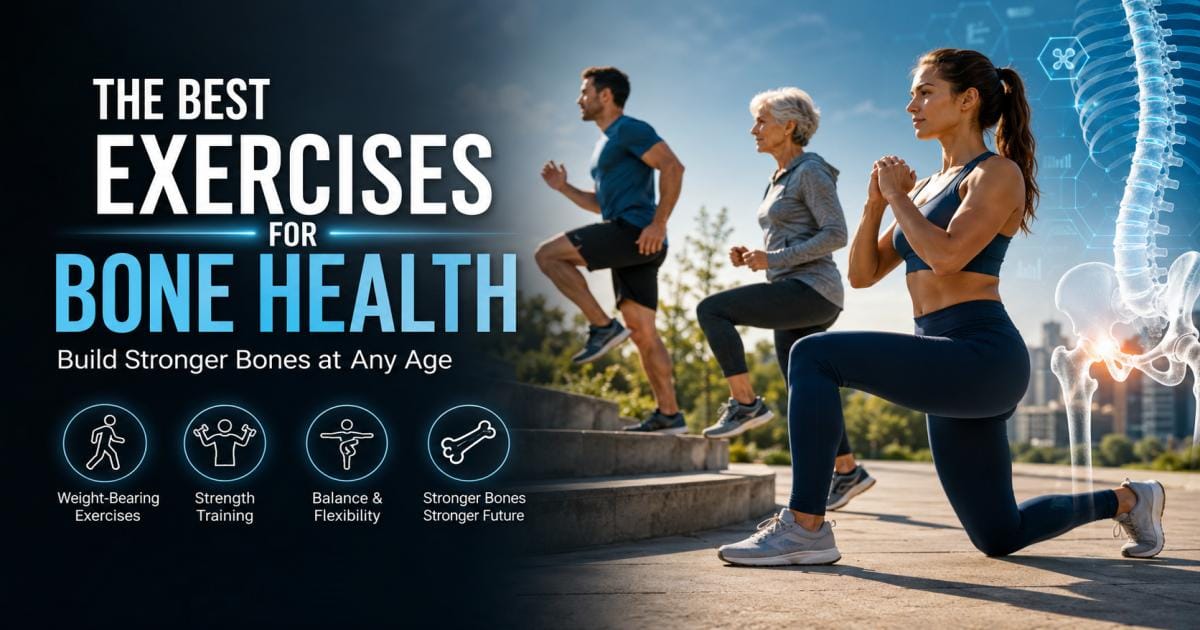
The best exercises for bone health are weight-bearing cardio and heavy resistance training. Activities like brisk walking, stair climbing, and lifting weights force your body to work against gravity. This mechanical stress triggers your body to pack more minerals into your skeleton, creating thicker, stronger bones.
Why Bone Health is More Important Than Most People Realize
Weak bones typically do not exhibit any symptoms until a fracture happens. A simple fall from a standing height can break a hip or wrist if your bone density is low. Strong bones do more than just hold you upright; they protect your internal organs, store essential minerals like calcium, and anchor your muscles.
How Exercise Impacts Bone Density and Strength
Physical impact and muscle contractions pull on the bone. Your body interprets this pulling as a signal that the bone needs to handle heavy loads. In response, it sends specialized cells to build new tissue, increasing both the density (mineral content) and the structural strength (the internal framework) of the bone.
Who Should Read This Guide
This guide provides actionable, age-specific advice for anyone looking to improve skeletal strength. Whether you are 25 and building peak mass, 50 and navigating hormonal changes, or 75 and focusing on fall prevention, you will find exactly what you need to do safely.
Quick Answer: What Are the Best Exercises for Bone Health?
If you need a fast answer for your daily routine, prioritize these three categories:
- High-Impact Weight-Bearing Cardio: Jogging, jumping rope, and playing tennis (great for healthy adults under 50).
- Low-Impact Weight-Bearing Cardio: Brisk walking, stair climbing, or hiking (best for older adults or those with joint issues).
- Resistance Training: Lifting weights, using resistance bands, or doing bodyweight squats (essential for all ages to build structural density).
Note: Swimming and cycling are excellent for heart health, but because the water or bike supports your weight, they do not build bone density.
What Are the Top Exercises for Bone Health?
The Short Answer
To build bone, you must load the skeleton. The most effective movements force you to stand on your feet and work against gravity. Mixing 150 minutes of moderate weight-bearing cardio per week with two days of heavy strength training typically yields the best results for skeletal health.
Why Certain Exercises Build Bone Better Than Others
Bones respond specifically to the stress placed on them. A concept known as Wolff’s Law dictates that a bone grows and remodels in direct response to the forces that act upon it. A tennis player, on average, has significantly higher bone density in their swinging arm than in their non-dominant arm. Exercises that create high impact or require you to lift heavy loads trigger Wolff’s Law much faster than low-impact, supported movements.
The Science Behind Bone Remodeling and Exercise
Your body relies on two types of cells for bone maintenance:
- Osteoclasts: Cells that clear away old, damaged bone tissue.
- Osteoblasts: Cells that lay down new, healthy bone tissue.
Without exercise, osteoblast activity slows down while osteoclasts keep working, leading to a net loss of bone. High-impact movements push osteoblasts into overdrive, helping you build bone faster than you lose it.
How Exercise Strengthens Bones Naturally
The Relationship Between Stress and Bone Growth
Think of bone tissue like a muscle. When you lift a heavy dumbbell, muscle fibers sustain microscopic damage and heal stronger. Bones operate similarly. The physical stress of your foot hitting the ground or a muscle pulling on a joint stimulates bone-forming cells to reinforce the stressed area.
Bone Density vs. Bone Strength
These two terms mean different things:
- Bone Density: The amount of mineral matter packed into a square inch of bone. You measure this with a DEXA scan.
- Bone Strength: The overall physical quality of the bone, including its density and its internal honeycomb-like structure.
Exercise improves both. It packs more calcium into the bone and thickens the internal framework, making the bone highly resistant to snapping.
Why Physical Activity Becomes More Important With Age
Age-related hormonal drops, specifically estrogen in women and testosterone in men, accelerate bone breakdown. Simultaneously, adults naturally lose muscle mass (sarcopenia). Without strong muscles pulling on the skeleton, bone loss speeds up. Exercise serves as an artificial signal, compelling the body to prioritize skeletal strength even as hormone levels decline.
The 5 Types of Exercises That Improve Bone Health
1. Weight-Bearing Exercises
These activities make you move against gravity while staying upright.
- Walking: A brisk pace creates mild, healthy impact for the hips and spine.
- Hiking: Navigating uneven terrain adds resistance and strengthens the lower body.
- Dancing: Multi-directional foot strikes enhance bone density from different angles.
- Stair Climbing: Pushing your body weight upward provides high-quality resistance.
- Jogging: Higher impact delivers a stronger growth signal to leg and hip bones.
2. Resistance Training Exercises
Strength training involves moving your body against an external load.
- Free Weights: Dumbbells and kettlebells force you to stabilize your joints while lifting.
- Resistance Bands: These provide safe, continuous tension on the muscles and bones.
- Weight Machines: Ideal for lifting heavier weights safely while maintaining balance.
- Bodyweight Exercises: Push-ups and squats use your own mass to trigger bone growth.
3. Balance Training Exercises
Preventing falls is as important as increasing density.
- Single-Leg Stands: Standing on one foot strengthens ankles and improves core stability.
- Heel-to-Toe Walks: Walking a tightrope line trains the brain-body connection.
- Tai Chi: Slow, controlled weight shifting heavily reduces the risk of stumbling.
4. Posture Exercises
Poor posture places dangerous, uneven pressure on the spinal vertebrae.
- Shoulder Blade Squeezes: Pulling the shoulders back strengthens the upper back.
- Wall Alignment: Standing with your heels, glutes, shoulders, and head against a wall trains a neutral spine.
- Back Extensions: Lifting the chest slightly off the floor strengthens spinal erector muscles.
5. Flexibility and Mobility Exercises
Tight muscles pull joints out of alignment and increase fall risk.
- Gentle Stretching: Keeps muscles long and responsive.
- Joint Mobility Routines: Moving shoulders and hips through their full range of motion.
- Safe Yoga: Poses that improve flexibility without requiring deep spinal twisting.
15 Best Exercises for Bone Health (Ranked by Effectiveness)
1. Brisk Walking
- How it helps bones: The repetitive strike of your heel against the ground signals the lower body to retain density.
- Targeted areas: Hips, femurs, and lower spine.
- Difficulty: Low.
- Safety tips: Wear supportive athletic shoes and stick to flat, even surfaces to avoid tripping.
2. Stair Climbing
- How it helps bones: Lifting your body weight against gravity provides a strong resistance stimulus.
- Targeted areas: Hips, pelvis, and knees.
- Difficulty: Medium.
- Safety tips: Keep your entire foot on the step. Use the handrail for balance if necessary.
3. Squats
- How it helps bones: The powerful pull of the glutes and quadriceps against the femur triggers massive bone remodeling.
- Targeted areas: Hips, thighs, and lower back.
- Difficulty: Medium.
- Safety tips: Keep your chest up and push your hips back as if sitting in a chair.
4. Lunges
- How it helps bones: Places heavy loads on one leg at a time while challenging balance.
- Targeted areas: Hips, femurs, and ankles.
- Difficulty: Medium to High.
- Safety tips: Step forward cleanly. Keep your front knee aligned directly over your ankle.
5. Deadlifts
- How it helps bones: Lifting a load from the floor applies healthy stress to the entire posterior chain (back of the body).
- Targeted areas: Spine, hips, and forearms.
- Difficulty: High.
- Safety tips: Maintain a perfectly flat back. Never round your spine. Hire a trainer to teach you the exact form.
6. Step-Ups
- How it helps bones: Mimics stair climbing but allows you to increase the step height for greater resistance.
- Targeted areas: Hips and thighs.
- Difficulty: Medium.
- Safety tips: Press through your heel to lift yourself; do not push off the bottom foot.
7. Jump Rope
- How it helps bones: Rapid, repeated impacts send strong shockwaves that aggressively build density.
- Targeted areas: Lower legs, knees, and hips.
- Difficulty: High.
- Safety tips: Jump on a shock-absorbing surface like a rubber mat. Avoid this completely if you have osteoporosis.
8. Dancing
- How it helps bones: Moving side-to-side and backward forces bones to adapt to non-linear physical stress.
- Targeted areas: Hips, spine, and ankles.
- Difficulty: Low to Medium.
- Safety tips: Ensure the floor is clear of rugs, cords, or liquid to prevent slips.
9. Hiking
- How it helps bones: Walking downhill forces muscles to absorb high-impact loads, which strongly stimulates bone growth.
- Targeted areas: Hips, legs, and ankles.
- Difficulty: Medium.
- Safety tips: Use trekking poles to improve stability and reduce excess wear on the knee joints.
10. Push-Ups
- How it helps bones: Supporting your body weight forces the upper skeleton to thicken.
- Targeted areas: Wrists, arms, and collarbones.
- Difficulty: Medium.
- Safety tips: Start against a wall or on your knees if full floor push-ups are too difficult.
11. Resistance Band Rows
- How it helps bones: Pulling a band builds upper back muscles, which constantly pull on the spine to keep it upright and dense.
- Targeted areas: Upper spine and shoulders.
- Difficulty: Low.
- Safety tips: Anchor the band to a heavy, immovable object like a sturdy door frame.
12. Heel Raises
- How it helps bones: Lifting onto your toes strengthens the lower legs and significantly improves balance.
- Targeted areas: Ankles and calves.
- Difficulty: Low.
- Safety tips: Stand next to a wall or heavy chair so you can catch yourself if you wobble.
13. Farmer’s Carries
- How it helps bones: Holding heavy weights while walking forces the entire skeleton into a rigid, stable position.
- Targeted areas: Spine, hips, wrists, and shoulders.
- Difficulty: Medium.
- Safety tips: Keep your shoulders pulled back and look straight ahead while walking.
14. Tai Chi
- How it helps bones: Drastically improves balance and spatial awareness, reducing the risk of a bone-breaking fall.
- Targeted areas: Full body coordination.
- Difficulty: Low.
- Safety tips: Move slowly. Only bend your knees as far as feels comfortable and secure.
15. Tennis or Racquet Sports
- How it helps bones: Sprinting, stopping, and swinging a racket create multi-directional impact on the entire skeleton.
- Targeted areas: Wrists, arms, hips, and legs.
- Difficulty: High.
- Safety tips: Warm up for at least 10 minutes to protect your joints, especially your knees and rotator cuffs.
Best Exercises for Bone Health by Age Group
Children and Teenagers
The human body builds about 90% of its peak bone mass by age 18 in girls and age 20 in boys. The best activities at this age involve high-impact and multidirectional movement. Gymnastics, soccer, basketball, and running pack maximum density into the skeleton, creating a strong foundation for later life.
Adults in Their 20s and 30s
During these years, the goal is to maximize and lock in your peak bone mass. Combine heavy resistance training (squats, deadlifts, presses) with high-impact cardio (running, jump rope). Lifting progressively heavier weights ensures bones stay dense as your metabolism slowly begins to shift.
Adults in Their 40s and 50s
Bone breakdown begins to outpace bone creation in your 40s. For women experiencing menopause, the drop in estrogen causes rapid bone loss. Switch to moderate-impact weight-bearing exercises like brisk walking or jogging. Pair this with 2 to 3 days of resistance training focusing specifically on the hips and spine.
Adults Over 60
Joint health often dictates exercise choices at this stage. High-impact jumping becomes risky. Shift your focus to brisk walking, stair climbing, and strength training using machines or resistance bands. Add balance exercises like Tai Chi or single-leg stands to your daily routine to prevent falls.
Seniors Over 70
The primary goal for adults over 70 is preventing fractures, maintaining mobility, and preserving independence. Focus on low-impact weight-bearing activities, daily walks, posture correction, and balance training. Chair exercises help maintain muscle, but remember you still need on-your-feet weight-bearing movement to protect the bones.
Best Exercises for Women to Improve Bone Density
Why Women Face a Higher Osteoporosis Risk
Women naturally have smaller, thinner bones than men. Additionally, estrogen, a hormone essential for protecting bone mass, drops sharply during menopause. Medical data indicate women can lose up to 20% of their bone density in the five to seven years immediately following menopause.
Pre-Menopause Exercise Recommendations
Women in their 30s and 40s must lift weights. Focus on heavy compound movements like squats, lunges, and push-ups. Lift weights that feel challenging for 8 to 12 repetitions. High-impact activities like hiking and jumping rope are excellent for banking extra bone density before menopausal changes occur.
Post-Menopause Bone-Strengthening Workouts
After menopause, the goal shifts to halting rapid bone loss. Walk briskly every day. Add resistance training with bands or dumbbells three times a week. Exercises that target the hips and spine are non-negotiable, as these are the most common and dangerous fracture sites for older women.
Best Exercises for Men to Maintain Strong Bones
Common Bone Health Risks in Men
Men have larger skeletons but still face severe bone loss as they age. Risk factors include declining testosterone levels, heavy alcohol consumption, and long-term use of corticosteroid medications. Men typically experience osteoporosis complications about 10 years later in life than women do.
Strength Training Strategies That Support Bone Density
Men respond well to heavy, compound lifting, which triggers hormone release and skeletal growth. Squats, deadlifts, bench presses, and overhead presses form the ideal routine. Aim for 3 to 4 days a week of lifting weights, paired with weight-bearing cardio like rucking (walking with a weighted backpack) or tennis.
Best Exercises for Osteoporosis and Osteopenia
Safe Exercises for Osteoporosis
If a DEXA scan reveals you have osteoporosis (severe bone loss) or osteopenia (early-stage bone loss), you must exercise carefully. Safe activities include walking on a flat treadmill, lifting light weights while keeping the spine perfectly straight, using resistance bands, and practicing Tai Chi.
Exercises to Avoid With Fragile Bones
Avoid all high-impact or explosive movements like jumping or running on concrete. You must strictly avoid exercises that require you to sharply twist your spine or bend forward from the waist. Banned movements include sit-ups, toe touches with straight legs, golf (due to the violent twist), and certain yoga poses.
Warning Signs You Should Stop Exercising
Stop moving immediately if you feel sudden, sharp pain in your back, ribs, or groin. A dull ache in the muscles is normal fatigue; sharp pain in the bone or joint is a warning sign of a potential fracture. Dizziness or a sudden loss of balance also means you must stop and sit down.
When to Speak With a Doctor or Physical Therapist
Always consult a doctor before starting a routine if you have been diagnosed with bone loss. A physical therapist is highly recommended. They evaluate your specific medical history, measure your exact movement limitations, and design a routine that builds strength without risking a break.
A Beginner-Friendly Weekly Bone Health Workout Plan
7-Day Exercise Schedule
- Monday: 30-minute brisk walk + 10 minutes of balance practice (single-leg stands).
- Tuesday: 20-minute full-body strength training (squats, push-ups, band rows).
- Wednesday: 30-minute dancing, hiking, or brisk walking.
- Thursday: Rest or gentle stretching/posture exercises.
- Friday: 20-minute full-body strength training.
- Saturday: 45-minute longer walk or weekend hike on uneven terrain.
- Sunday: Rest and recovery.
Home Workout Version
You can build bone without a gym. Walk your neighborhood for weight-bearing cardio. Use water bottles or heavy books as resistance weights. Perform bodyweight squats to a sturdy kitchen chair, do push-ups against the wall, and use resistance bands anchored to a heavy door.
Gym Workout Version
At a gym, use the treadmill on a slight incline for your cardio. For strength, utilize the leg press machine, chest press machine, and seated cable row. Machines lock your body into a safe path, making them excellent for beginners worried about balance.
How to Progress Safely
Bones only grow if you slowly increase the demand. Start with light weights and 15-minute walks. Every two weeks, increase the challenge slightly. Walk for 5 extra minutes, or lift a weight that is 2 pounds heavier. This gradual progression forces the skeleton to keep adapting.
Exercises That May Harm Bone Health if Done Incorrectly
Excessive Forward Bending
Exercises like sit-ups, crunches, and toe-touches place massive compression on the front of the spinal vertebrae. If you have low bone density, this forward bending motion (flexion) easily causes painful compression fractures in the spine.
High-Impact Activities for High-Risk Individuals
Jumping off boxes, running on pavement, or playing contact sports builds bone in healthy adults. However, if you are older or have osteopenia, these violent impacts can cause microscopic cracks in weak bones to suddenly snap.
Poor Lifting Technique
Picking a heavy object off the floor with a rounded back places severe stress on the lumbar spine. Always bend at the knees and hips, keep your chest up, and maintain the natural inward curve of your lower back.
Common Mistakes That Increase Fracture Risk
- Exercising in socks on hardwood floors (high slip risk).
- Holding your breath during heavy lifts (dangerously spikes blood pressure).
- Using rapid, jerky movements. Moving too fast easily pulls weak bones out of alignment or causes muscle tears that lead to falls.
How Long Does It Take for Exercise to Improve Bone Density?
What Research Shows
Bone remodels slowly. Medical studies typically show it takes a minimum of 6 to 12 months of consistent weight-bearing exercise to see measurable density increases on a DEXA scan. However, your muscles grow stronger, and your balance improves in just 4 to 8 weeks, which immediately lowers your risk of falling.
Factors That Affect Results
Your physical results depend heavily on your baseline age, hormone levels, diet, and exercise consistency. A person who lifts weights vigorously three times a week will experience faster bone remodeling than someone who takes a slow walk once a week.
Realistic Expectations for Different Age Groups
- Under 30: You can actively increase your overall bone density and size.
- Ages 30 to 50: You can maintain your peak bone mass and make slight density gains in targeted areas.
- Over 50: Halting bone loss is the primary goal. Keeping your bone density exactly where it is counts as a massive physiological victory.
Exercise vs. Diet: Which Matters More for Good Bone Health?
Why Both Are Essential
Exercise provides the mechanical signal to build bone, while diet provides the physical materials to build it. Without both, the process fails. You cannot exercise enough to overcome a severe calcium deficiency, and eating massive amounts of calcium will not build bone if you sit on the couch all day.
Calcium Requirements by Age
Calcium is the primary mineral that forms the rigid structure of your bones.
- Adults up to age 50 require roughly 1,000 mg per day.
- Women over the age of 50 and men over the age of 70 need to consume 1,200 mg per day. Source your calcium from dairy products, leafy green vegetables, almonds, and fortified plant milks.
Vitamin D and Bone Strength
Your body cannot absorb dietary calcium without adequate Vitamin D. Without it, the calcium you eat passes through your digestive system unused. Aim for 600 to 800 IU daily through safe sun exposure, fortified foods, or a medical-grade supplement.
Protein’s Role in Bone Maintenance
Bones are roughly 50% protein by volume. Protein forms the flexible internal web that calcium minerals stick to. Consume lean meats, beans, eggs, and fish daily to give your bones the structural flexibility they need to absorb physical impact without snapping.
Additional Lifestyle Habits That Support Strong Bones
Maintaining a Healthy Weight
Being severely underweight deprives your body of the mass needed to create bone-building impact when walking. Conversely, carrying extreme excess weight places destructive stress on joint cartilage. Maintaining a lean, muscular body weight is optimal for skeletal health.
Getting Enough Sleep
Bone tissue remodeling occurs primarily while you sleep. Getting less than 7 hours of sleep per night causes your body to produce excess cortisol (a stress hormone), which actively breaks down bone tissue over time.
Avoiding Smoking
Cigarette smoke is highly toxic to bone cells. It inhibits calcium absorption and actively destroys estrogen in women, leading to rapid skeletal thinning. Quitting smoking immediately slows the rate of bone degradation.
Limiting Excess Alcohol Consumption
Heavy alcohol intake disrupts the body’s calcium balance and interferes with bone-protecting hormones. It also severely impacts your coordination, drastically increasing your risk of falling. Limit your intake to one drink per day or fewer.
Staying Physically Active Throughout the Day
A 30-minute workout does not reverse the damage of sitting in a chair for 10 hours. Get up, stretch, and walk for two minutes every hour. Frequent, low-level movement keeps your bones engaged all day.
Frequently Asked Questions
What is the best single exercise for promoting bone health?
There is no single perfect movement, but combining brisk walking (for weight-bearing impact) with heavy squats (for resistance) provides the highest total stimulus for the hips, legs, and spine.
Can walking increase bone density?
Walking increases or maintains bone density in the lower body, provided the pace is brisk. A slow stroll fails to provide the necessary mechanical impact to stimulate osteoblast cells.
How often should I exercise for stronger bones?
Target 30 minutes of weight-bearing cardio 4 to 5 days a week. Supplement this with heavy resistance training 2 to 3 days a week.
Is strength training more effective than walking for enhancing bone health?
Strength training places heavier, highly targeted loads on specific bones, making it generally more effective for building raw density. Walking is vital for maintaining cardiovascular health and ensuring daily joint mobility.
Can exercise reverse osteoporosis?
Exercise rarely reverses severe osteoporosis entirely, but it halts further bone loss, rebuilds minor density, and drastically improves the balance and muscle strength required to prevent a fracture-causing fall.
Are resistance bands effective for bone health?
Yes. Resistance bands place constant mechanical tension on the muscles. The muscles pull forcefully against the bones, stimulating bone-building cells identically to heavy dumbbells.
What exercises should seniors avoid?
Older adults with weak bones must strictly avoid high-impact jumping, deep forward spinal bending, violent twisting motions, and any exercise performed on an unstable surface like a balance board.
How long does it take to strengthen bones naturally?
You will notice increased muscle strength and balance within 4 to 8 weeks. However, new bone tissue takes 6 to 12 months of consistent diet and exercise to show measurable density changes on a medical scan.



[…] on digestion and bone health. Calcium-rich cottage cheese and fiber-heavy berries support joint health and keep the digestive […]
[…] your mood before it improves your waistline. In short, LotsofPower community wellness treats health as something you build with others, not something you white-knuckle through by […]