
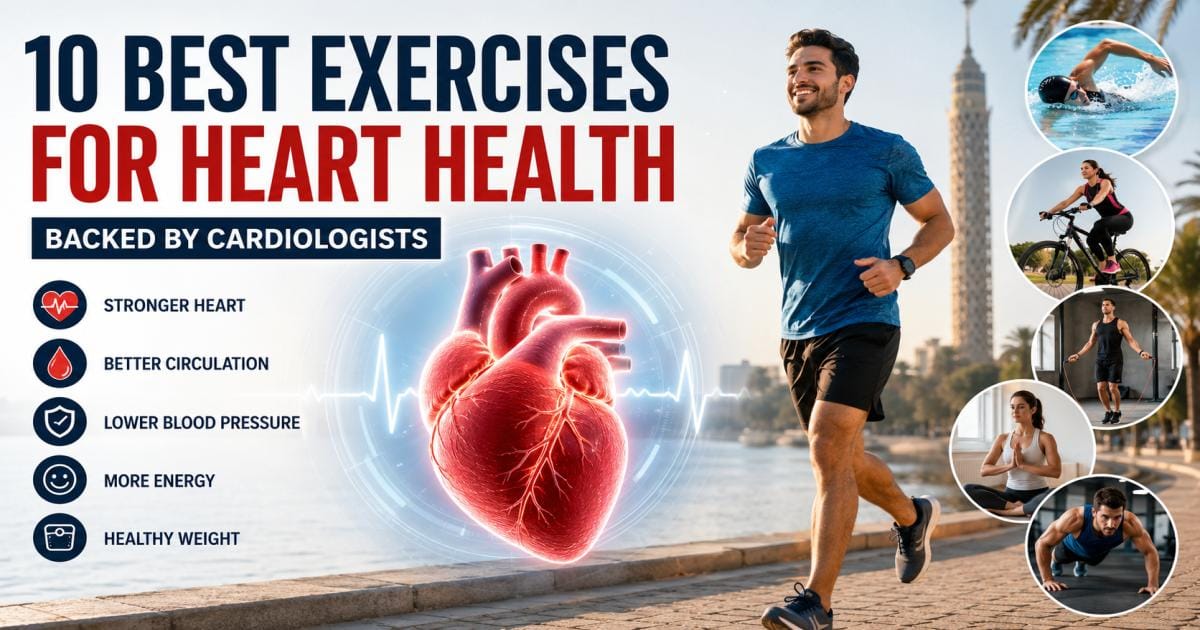

Heart disease is a leading cause of death worldwide, and small daily choices make a large difference for long‑term risk. Regular movement helps the heart pump more efficiently, lowers blood pressure, and improves cholesterol and blood sugar control, measurable changes cardiologists track in the clinic.
This article lays out the best exercises for heart health that cardiologists most often recommend, why they work, how to start safely, and easy routines you can use at home in warm climates such as Egypt or in any city.
Why exercise matters now
- Physical inactivity raises the chance of heart attack and stroke by increasing blood pressure, weight, and harmful cholesterol levels; steady activity reduces each of these factors.
- Many people carry practical barriers – time, heat, or joint pain, so the best plan is one you can keep. Cardiologists focus on habit and safety rather than perfect workouts.
- You will learn practical steps: how to pick exercises, how often to move, and how to avoid harms while improving heart fitness.
Why Exercise Is Essential for Heart Health
How activity improves heart function
- Regular aerobic work strengthens the heart muscle so it pumps more blood per beat; that lowers resting heart rate and reduces strain during daily tasks.
- Exercise improves blood‑vessel function, increasing smooth blood flow and lowering the chance of plaque buildup over the years.
- It also helps the body handle sugar and fats better, which reduces the metabolic drivers of heart disease.
How regular workouts reduce heart disease risk
- Routine activity lowers systolic and diastolic blood pressure on average and raises protective HDL cholesterol when combined with a healthy diet.
- People who keep steady activity tend to have fewer heart attacks and recover faster after cardiac events when they follow doctor guidance and rehab.
- For many, 30 minutes a day of moderate movement yields clear, measurable improvements in blood pressure and metabolic markers over weeks to months.
Can exercise reverse poor heart health?
- For people with early signs of heart disease, consistent exercise plus diet and prescribed meds can shrink symptoms, improve exercise tolerance, and reduce hospital visits.
- Structured cardiac rehab programs led by clinicians deliver the safest, fastest gains for those recovering from heart surgery or attacks.
- Complete “reversal” depends on the extent of damage, but quality of life and measurable heart function often improve substantially with effort.
What Makes an Exercise Good for Your Heart?
Aerobic vs anaerobic: which matters most?
- Aerobic activities (sustained walking, cycling, swimming) raise heart rate in a controlled way and build endurance; these give the largest steady benefits for blood‑vessel health.
- Anaerobic and strength work (lifting, sprinting) build muscle and improve metabolism and long‑term blood pressure control; both types complement each other.
- Cardiologists often prescribe a mix: mostly aerobic work for steady heart benefit plus two weekly strength sessions for metabolic health.
Recommended heart rate zones for safe training
- A practical method: moderate intensity raises your breathing so you can talk but not sing; vigorous intensity makes talking difficult.
- For most adults, aim for roughly 50–70% of maximum heart rate for moderate sessions, and 70–85% for vigorous bursts; if you have medical conditions, your clinician will set exact numbers.
- Use the talk test at home if you do not have a heart monitor.
How cardiologists evaluate heart‑friendly workouts
- Physicians check if an activity raises heart rate safely, fits personal health limits (blood pressure, arrhythmia, past heart events), and can be repeated over the long term.
- They also value gradual progression: start small, build time and intensity slowly, and track symptoms like breathlessness or chest pain.
- The most useful workouts are those the patient enjoys enough to keep doing.
10 Best Exercises for Heart Health
Brisk Walking
Why it helps: Walking is low‑risk, effective, and easy to fit into daily life.
How to do it: Aim for a pace that makes talking harder but still possible; 30 minutes most days meets core targets.
Who benefits most: Beginners, older adults, people with joint limits.
Running or Jogging
Why it helps: Running builds aerobic capacity and raises VO2 max, which links to lower mortality risk in long‑term studies.
How to do it: Start with walk/run intervals and add time gradually to prevent injury.
Who benefits most: People with healthy joints and some prior fitness foundation.
Cycling
Why it helps: Cycling offers sustained aerobic load with low impact on knees and hips.
How to do it: Ride outdoors or use a stationary bike; mix steady rides with interval days.
Who benefits most: People with joint pain, commuters, and heat‑sensitive exercisers.
Swimming
Why it helps: Water supports the body, enabling longer sessions without joint stress while working the entire body.
How to do it: Alternate steady laps with faster intervals.
Who benefits most: Those with arthritis, obesity, or heat intolerance.
Jump Rope
Why it helps: Skipping raises heart rate rapidly and improves coordination in short time blocks.
How to do it: Begin with 30–60 second bursts and rest; build to several rounds for 5–15 minutes total.
Who benefits most: Time‑pressed people and those who want efficient calorie burn.
High‑Intensity Interval Training (HIIT)
Why it helps: Short bursts of hard effort followed by rest deliver big improvements in fitness and metabolic health in less time.
How to do it: Use safe intervals (for example, 30 seconds hard, 90 seconds easy); choose running, cycling, rowing or bodyweight moves.
Who benefits most: People with some fitness base and no unstable heart conditions; consult your clinician first.
Strength Training
Why it helps: Muscle mass helps control blood sugar, supports weight loss, and contributes to lower resting blood pressure over time.
How to do it: Two sessions weekly, full‑body moves (squats, rows, presses), 8–12 reps per set.
Who benefits most: Everyone, especially mid‑life and older adults who need to preserve muscle.
Stair Climbing
Why it helps: Stairs provide intense, functional cardio and leg strength gains in short sessions.
How to do it: Climb steadily or in intervals; be cautious with knees and balance.
Who benefits most: People with limited time who can safely use stairs.
Rowing
Why it helps: Rowing trains large muscle groups and gives efficient aerobic load with low joint stress.
How to do it: Use a rowing machine with steady technique for 15–30 minutes.
Who benefits most: Those wanting full‑body cardio with minimal impact.
Yoga
Why it helps: Yoga reduces stress hormones, lowers resting blood pressure in many people, and improves flexibility and balance.
How to do it: Gentle flows or breathing‑focused classes several times per week help supplement aerobic work.
Who benefits most: People needing stress control, improved balance, or low‑impact activity.
How Often Should You Exercise for a Healthy Heart?
Weekly exercise recommendations from clinicians
- A practical target is 150–300 minutes of moderate aerobic activity per week, or 75–150 minutes of vigorous activity; add strength work at least twice weekly.
- Short sessions count: several 10–15 minute blocks during the day accumulate toward the weekly goal.
- For added benefit, aim toward the higher end of the moderate range as fitness allows.
Best workout duration for heart benefits
- Most adults see gains from sessions between 20 and 60 minutes, depending on intensity; longer sessions help endurance, while short interval work improves fitness quickly.
- Beginners should start with 10–15 minutes and add time each week by 5–10 minutes.
Rest days and recovery importance
- One or two rest or light‑activity days weekly help muscles and the heart recover and prevent overuse injuries.
- Recovery includes sleep, light walking, and stretching; quality sleep supports heart‑health gains from training.
Best Exercises for Heart Health by Age Group
In your 20s and 30s
- Focus: build a routine and strength-based, mix running, cycling, swimming, and two strength sessions weekly.
- Tip: use HIIT occasionally for time efficiency, but mind recovery to avoid injury.
After 40
- Focus: joint protection and muscle preservation prefer low‑impact cardio (cycling, swimming), regular strength work, and extra recovery.
- Tip: monitor blood pressure and resting heart rate; adjust intensity if recovery slows.
Seniors 60+
- Focus: safe, steady aerobic movement and balance walking, water exercise, gentle cycling, and resistance bands.
- Tip: prioritize balance work (tai chi or yoga) to reduce fall risk and maintain independence.
Best Exercises for Heart Health at Home
No‑equipment cardio workouts
- Marching in place, step‑ups on a low stair, bodyweight circuits (squats, lunges, push‑ups adjusted to ability) raise heart rate without gear.
- Short circuits repeated 3–5 times give a solid aerobic stimulus.
Quick 15‑minute home routines
- Example routine: 1 minute brisk march, 1 minute squats, 1 minute mountain climbers (or knee‑friendly substitute), 1 minute rest — repeat 3 times.
- That yields 12 minutes of active work plus warm‑up and cool‑down, effective for busy days.
Indoor options for hot climates like Egypt
- Train early morning or late evening when the heat is lower, use shaded pools or indoor gyms, or do stationary cycling/treadmill at home.
- Hydrate before and after; heat raises heart rate, so reduce intensity on very hot days.
Safety Tips Before Starting Heart Exercises
When to see a cardiologist first
- Seek medical advice before starting vigorous programs if you have chest pain, fainting, irregular heartbeats, known coronary disease, uncontrolled blood pressure, or diabetes with complications.
- If you have recent heart surgery or a heart attack, enroll in a cardiac rehab program supervised by clinicians.
Warning signs to stop exercising
- Stop immediately and seek help for chest tightness or pressure, sudden severe breathlessness, fainting or near fainting, severe dizziness, or new, severe palpitations.
- Mild breathlessness and muscle fatigue are normal; severe or worsening symptoms are not.
How to start safely with high blood pressure or heart disease
- Begin with low‑intensity aerobic work and build time slowly; monitor symptoms and blood pressure at rest and with activity as your doctor advises.
- Supervised programs and gradual progress reduce risks and deliver better long‑term outcomes.
Common Mistakes That Can Harm Your Heart During Exercise
Overtraining
- Rapid jumps in time or intensity raise injury risk and stress hormone levels; progress by 10% per week in volume.
- Build rest weeks and track how your body feels.
Skipping warm‑ups and cool‑downs
- A 5–10 minute warm‑up reduces cardiac strain and joint shock; cool‑downs help blood pressure return to normal safely.
Poor hydration and heat exposure
- Dehydration raises heart rate and lowers performance; in hot climates, move workouts to cooler times and drink fluids before and after.
Diet and Lifestyle Habits That Support Heart Health
Best foods to support heart gains
- Choose vegetables, fruits, whole grains, legumes, fish, lean meats, nuts, and olive oil; limit processed foods, added sugar, and excess salt for measurable blood‑pressure benefits.
- Small dietary changes sustained over months often beat short diets in lowering heart risk.
Sleep and stress management
- Adequate sleep and lower chronic stress reduce blood pressure and inflammation; combine exercise with breathing practice, meditation, or yoga for best effects.
- Even simple breath work after exercise can lower heart rate and speed recovery.
Combining exercise with healthy nutrition
- Exercise improves how your body uses nutrients; pair training with balanced meals for better weight control and blood‑sugar results.
- Consistency in both areas leads to measurable improvements in lab markers like cholesterol and HbA1c over months.
Frequently Asked Questions About the Best Exercises for Heart Health
What is the number one best exercise for heart health?
- No single move is best; brisk aerobic activities such as walking or cycling are the most accessible and deliver consistent heart benefits for most people.
Is walking enough for heart health?
- Yes, brisk walking for 150 minutes a week meets core activity targets and produces meaningful drops in blood pressure and improved fitness for many.
Can too much exercise damage the heart?
- Very high volumes and extreme endurance training may increase the risk for a small number of people; for most adults, regular moderate to vigorous exercise is far more beneficial than harmful when done sensibly.
What exercise lowers blood pressure fastest?
- Repeated aerobic activity such as brisk walking, stationary cycling, or swimming usually produces the fastest, sustained reductions in blood pressure when done regularly.
Final Thoughts: Choosing the Best Exercises for Heart Health
How to pick the right exercise
- Match the exercise to your current health, time, and what you enjoy. Beginners should start with walking and simple strength moves; build toward a mix of aerobic and resistance work.
- Small, reliable steps beat dramatic but short‑lived changes. Track one or two measures, minutes of activity per week, and resting heart rate to see progress.
Consistency over intensity
- Regular moderate activity maintained over the years yields the largest health return. Choose activities you like so you stay active long term.
Building a long‑term heart‑healthy routine
- Aim for steady aerobic minutes each week, two strength sessions, regular flexibility or balance work, sleep and stress control, and sensible eating. If you have heart disease or risk factors, consult your clinician for tailored targets.



[…] Cardiologists provide heart health screenings, manage high blood pressure, and perform ECGs to monitor cardiovascular function. […]
[…] Swimming and cycling are excellent for heart health, but because the water or bike supports your weight, they do not build bone […]
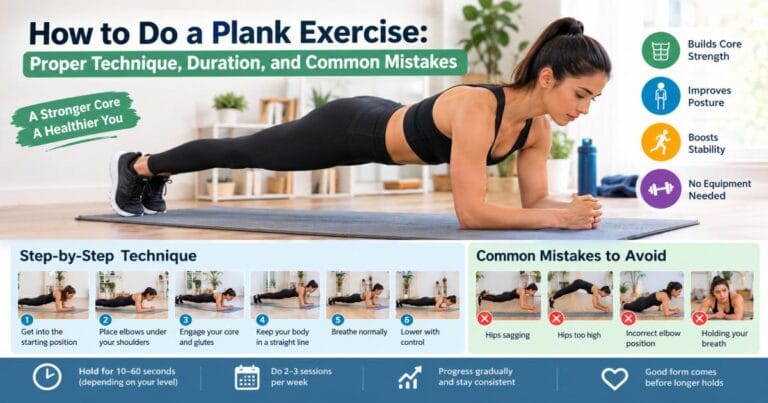
[…] holds short. McGill told Men’s Health he has seen plank-related injuries in people with back pain who used inappropriate […]