
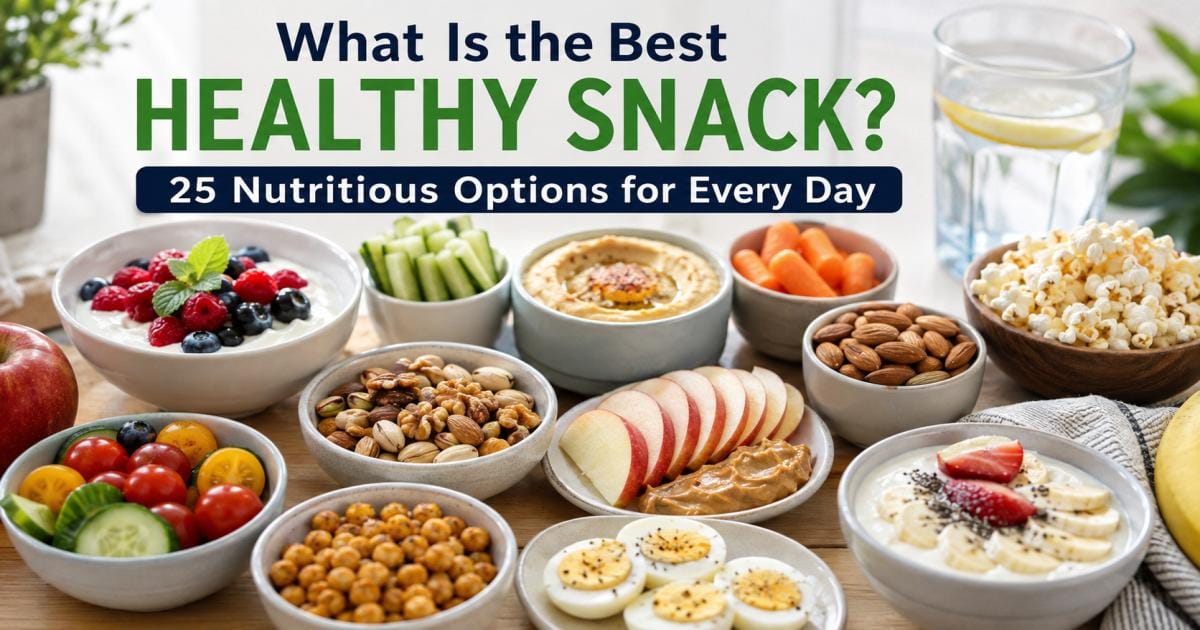

What is the best healthy snack? Pair a fiber-rich food with a protein source in a small portion — think Greek yogurt with fresh fruit, an apple with peanut butter, or a small handful of unsalted nuts. These combinations keep blood sugar steady, curb hunger for hours, and give your body real nutrients instead of empty calories. Below are 25 nutritious snack ideas, plus a simple method for building your own healthy snack from whatever is in your kitchen.
What Is the Best Healthy Snack?
No single snack works for every person or every moment. Your best choice depends on your goal, your schedule, and how long it’s been since your last meal. Still, the healthiest snacks share three traits: they contain fiber, they contain protein, and they skip added sugar.
Greek yogurt topped with berries meets all three. It takes under a minute to prepare, holds blood sugar steady for hours, and tastes good enough that it doesn’t feel like a compromise. That balance — real nutrition without extra effort — is what makes a snack genuinely healthy.
What Makes a Snack Healthy?
Five simple factors separate a nutritious snack from a junk-food snack.
Choose Nutrient-Dense Foods
Nutrient-dense foods deliver more vitamins, minerals, and fiber per bite. Fruits, vegetables, nuts, seeds, eggs, and dairy fall into this group. A bag of chips fills your stomach but gives your body little to work with. A boiled egg or a piece of fruit does both jobs at once — it satisfies hunger and feeds your cells.
Look for Less Added Sugar and Sodium
Many packaged snacks hide sugar and salt behind health-sounding names. Added sugar spikes blood sugar fast, then leaves you tired an hour later. Consuming too much sodium over time can increase blood pressure. Checking the label — even on snacks marketed as “natural” or “wellness” products — helps you avoid this trap.
Choose Whole or Minimally Processed Foods
A fresh apple is a whole food. Apple juice with added sugar is not. The less a food has been altered, the more fiber and nutrients it typically keeps. Whole and minimally processed snacks almost always win over their packaged versions.
Pay Attention to Portion Size
Even a healthy food can become a problem in the wrong amount. Nuts are a good example — great for you, but a large handful straight from a big bag adds up in calories fast. A small bowl or a pre-measured pouch keeps portions in check.
Pair Foods for Better Satiety
Fiber alone digests quickly. Protein alone can feel plain. Pair the two — apple slices with peanut butter, for example — and you get a snack that keeps you full for two to three hours instead of thirty minutes. This one habit improves almost any snack.
25 Best Healthy Snacks for Every Day
Here are 25 real-food snack ideas you can rotate through the week. Most take five minutes or less to prepare.
1. Greek Yogurt With Fresh Fruit
Greek yogurt carries roughly double the protein of regular yogurt, plus gut-friendly probiotics. Add sliced banana, berries, or chopped mango for natural sweetness instead of sugar.
2. Apple With Peanut Butter
Apple slices supply fiber; peanut butter supplies protein and healthy fat. Together, they form one of the most balanced quick healthy snacks you can make.
3. Banana With Almonds
Bananas offer fast energy and potassium. A small handful of almonds adds protein and healthy fat, making this a solid pre- or post-workout snack.
4. Fresh Fruit and a Handful of Nuts
Any seasonal fruit paired with a small portion of walnuts, cashews, or almonds makes a simple, portable, high-fiber snack.
5. Carrot and Cucumber Sticks With Hummus
Crunchy vegetables dipped in hummus deliver fiber and plant protein without anything fried or packaged.
6. Roasted Chickpeas
Chickpeas roasted with a little olive oil and spice turn into a crunchy, high-fiber, high-protein snack that can replace chips entirely.
7. Air-Popped Popcorn
Popcorn is a whole grain. Air-popped, with little butter or salt, it satisfies the urge to crunch while staying light on calories.
8. Oatmeal With Nuts and Cinnamon
A small warm bowl of oats topped with chopped nuts and cinnamon works as a mid-morning or evening snack, especially in cooler months.
9. Whole-Grain Toast With Avocado
Avocado brings heart-healthy fat and fiber. Spread on whole-grain toast, it becomes a snack that feels closer to a mini-meal.
10. Boiled Eggs With Fresh Vegetables
Eggs rank among the most complete protein sources available. Pair with cucumber or tomato slices for a filling, low-effort snack.
11. Cottage Cheese With Fruit
Cottage cheese runs high in protein and pairs naturally with pineapple, peaches, or berries for a sweet-and-savory combination.
12. Dates With Nuts
Dates bring natural sweetness and fiber. Stuff one with an almond or walnut for a snack that tastes indulgent but stays wholesome.
13. Unsalted Almonds
A small handful of plain almonds delivers protein, fiber, and healthy fat with no added seasoning or sugar.
14. Walnuts With Fresh Fruit
Walnuts carry plant-based omega-3 fat. Combine with apple or pear slices for a heart-friendly snack.
15. Pistachios
Shelling pistachios naturally slows down eating, which helps with portion control while still delivering protein and fiber.
16. Fresh Orange or Tangerine
Citrus fruit is portable and rich in vitamin C and fiber — an easy grab-and-go option for busy days.
17. Berries With Plain Yogurt
Plain yogurt with strawberries, blueberries, or raspberries combines probiotics, protein, and antioxidants in one bowl.
18. Whole-Grain Crackers With Hummus
Pick crackers with visible whole grains and pair with hummus for fiber and plant protein together.
19. Cucumber, Tomato, and Feta
This combination appears often in Mediterranean and Middle Eastern kitchens — fresh vegetables with a small amount of feta for flavor and protein.
20. Homemade Smoothie
Blend fruit, plain yogurt, and a handful of spinach for a snack that tastes like a treat but delivers real nutrients.
21. Chia Seed Pudding
Chia seeds soaked in milk overnight turn into a pudding-like snack loaded with fiber and omega-3 fat.
22. Edamame
Steamed edamame is high in plant protein and fiber, and shelling the pods naturally slows your eating pace.
23. Whole-Grain Bread With Egg
A boiled or fried egg on whole-grain bread makes a small, protein-rich snack that can double as a light breakfast.
24. Roasted or Baked Sweet Potato
Sweet potato cubes, roasted with a touch of olive oil, offer fiber and steady energy with no added sugar.
25. Homemade Trail Mix
Mix your own nuts, seeds, and a small amount of dried fruit so you control the sugar and portion size — something most store-bought trail mixes don’t offer.
Best Healthy Snacks by Goal
Different goals call for different snack choices. Here’s how to match your snack to what you actually need.
Best High-Protein Healthy Snacks
Greek yogurt, boiled eggs, cottage cheese, and edamame work well when you need to stay full longer or support muscle recovery after exercise.
Best High-Fiber Healthy Snacks
Roasted chickpeas, chia pudding, whole-grain crackers with hummus, and fresh fruit all support digestion and steady blood sugar.
Best Healthy Snacks for Energy
Bananas with almonds, oatmeal with nuts, and dates with nuts combine natural sugar and protein for a lift that lasts longer than sugar alone.
Best Healthy Snacks for Kids
Cut fruit, cheese cubes, whole-grain crackers with hummus, and small yogurt cups tend to work well for kids because they’re easy to eat and naturally mild or sweet.
Best Healthy Snacks for Egyptian and Middle Eastern Diets
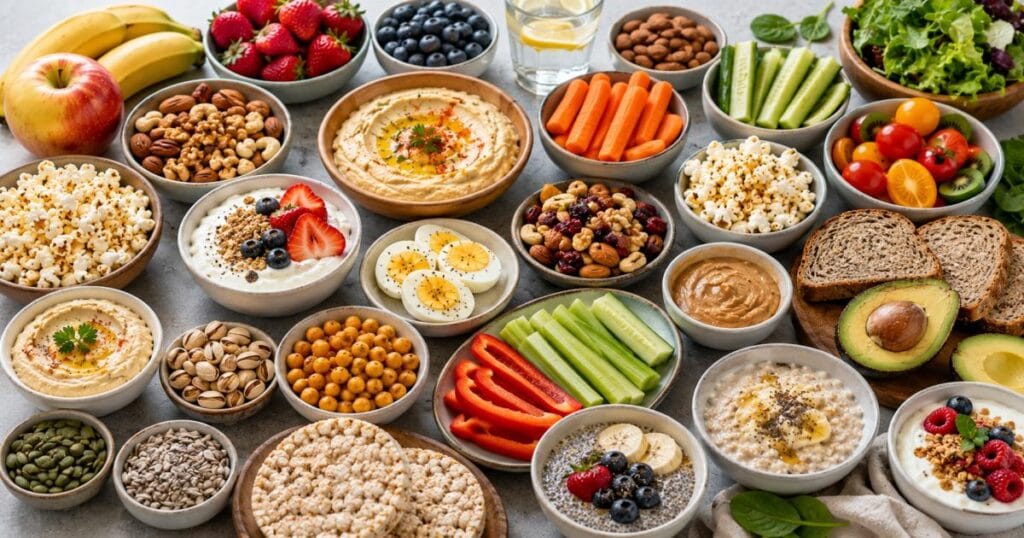
Traditional Egyptian and Middle Eastern eating habits already include several naturally healthy snack options.
Dates With Nuts
A classic pairing in most Egyptian homes, dates with almonds or walnuts combine fiber, natural sweetness, and healthy fat.
Hummus With Fresh Vegetables
Hummus made from chickpeas and tahini is a plant-protein-rich dip that pairs well with cucumber, carrot, or bell pepper strips.
Plain Yogurt With Fruit
Laban or plain yogurt mixed with seasonal fruit is common across the region and offers protein along with probiotics.
Roasted Chickpeas
Roasted chickpeas serve as a crunchy, protein-rich alternative to chips or fried snacks in many Egyptian households.
Fresh Seasonal Fruit
Egypt’s markets carry abundant seasonal fruit — mango, guava, and citrus — each a strong light snack on its own.
Simple Homemade Snack Plates
A small plate of cucumber, tomato, olives, and a bit of cheese reflects a traditional Mediterranean-style snack that fills you up without heaviness.
Are Snacks Actually Good for You?
Yes, when you choose them well. Snacking gets a bad reputation, but the real problem is usually the type of snack, not the act of snacking. A small, balanced snack between meals can prevent overeating later, hold your energy steady, and stop you from reaching for whatever food is closest when hunger hits hard. The nutrition inside the snack — not the timing of it — decides whether it helps or hurts you.
How to Build a Balanced Healthy Snack
If none of the 25 ideas above match what’s in your kitchen, build your own with this five-step method.
Step 1: Start With a Fiber-Rich Food
Pick a fruit, vegetable, or whole grain as your base — an apple, carrot sticks, or a slice of whole-grain bread all work.
Step 2: Add Protein
Add a protein source such as yogurt, eggs, cheese, nuts, or hummus. This is the part that keeps you full.
Step 3: Include a Healthy Fat When It Fits
A small amount of healthy fat, from nuts, seeds, or avocado, adds flavor and helps your body absorb certain vitamins.
Step 4: Check Your Portion
Keep the combination in the 150–250 calorie range so it stays a snack instead of turning into an extra meal.
Step 5: Choose Water or an Unsweetened Drink
Pair your snack with water, unsweetened tea, or sparkling water instead of a sugary drink, which can cancel out much of the benefit.
Healthy Snack Portion Sizes: How Much Should You Eat?
A useful target is 150 to 250 calories per snack. For nuts, that typically works out to a small handful, around 20 to 25 grams. For fruit, one medium piece is usually enough. For yogurt or cottage cheese, a small cup of about 150 grams fits the range well. On very active days, or after a long gap since your last meal, the higher end of that range makes sense.
Healthy Snacks vs. Common Unhealthy Snacks
| Instead of… | Try… |
| Candy | Fresh fruit + nuts |
| Potato chips | Air-popped popcorn |
| Sugary cereal bars | Nuts + dried/fresh fruit |
| Cookies | Plain yogurt + fruit |
| Sugary drinks | Water or unsweetened tea |
| Highly processed snack foods | Hummus + vegetables |
How to Choose Healthy Packaged Snacks
Not every packaged snack deserves a pass, but a few checks make the choice easier.
Check the Added Sugar
Favor products with little to no added sugar. If sugar appears in the first three ingredients, put it back on the shelf.
Check Sodium
Packaged snacks can carry surprising amounts of sodium. Aim for lower-sodium options, especially if you eat that snack often.
Look at Fiber and Protein
A solid packaged snack usually has at least 3 grams of fiber or 5 grams of protein per serving — ideally both.
Read the Ingredient List
A short ingredient list of recognizable, whole-food ingredients beats a long list of additives almost every time.
Easy Healthy Snack Ideas for Busy Days
On days with zero time to prepare anything, keep these on hand: a piece of fruit, a small bag of unsalted nuts, individual yogurt cups, boiled eggs made ahead of time, or pre-cut vegetables with a small container of hummus. Prepping a few of these during a slower day saves real time later in the week.
Common Healthy Snacking Mistakes to Avoid
Good intentions can still go sideways with a few common habits.
Eating Directly From the Package
It’s easy to lose track of how much you’ve eaten when snacking straight from a large bag or box. Portion out a small amount instead.
Choosing Snacks Only by Calories
A 150-calorie sugary snack is not the same as a 150-calorie handful of nuts. Look at what’s inside the food, not just the number on the label.
Ignoring Protein and Fiber
A snack with no protein or fiber typically leaves you hungry again within an hour, often leading to a second or third snack soon after.
Eating Because of Boredom Instead of Hunger
Not every urge to snack starts with real hunger. Pausing for a moment to check in with yourself can prevent snacking you didn’t actually need.
Turning Healthy Snacks Into Oversized Portions
Nuts, dried fruit, and cheese are nutritious, but they’re also calorie-dense. A large bowl instead of a small handful adds up fast.
Final Verdict
No single snack wins for every person, but one formula holds up across nearly all of them: pair a fiber-rich food with a protein source, keep the portion in the 150–250 calorie range, and skip added sugar. Greek yogurt with fruit, an apple with peanut butter, and roasted chickpeas all follow this same pattern — which is exactly why they work. Once you know this formula, you can turn almost anything in your kitchen into a healthy snack.
Frequently Asked Questions About Healthy Snacks
What is the best healthy snack?
The best healthy snack pairs fiber and protein in a small portion — Greek yogurt with fruit, an apple with peanut butter, or a handful of nuts are strong, simple choices.
What is a healthy snack before bed?
A light option like a small bowl of plain yogurt, a few almonds, or cheese with a whole-grain cracker works well before bed since these digest easily and won’t spike blood sugar.
Are fruits good healthy snacks?
Yes. Fruits carry natural fiber, vitamins, and water, making them one of the simplest healthy snack choices available.
Are nuts healthy snacks?
Yes, in moderate portions. Nuts supply protein, fiber, and healthy fat, but a small handful is enough since they’re calorie-dense.
Is yogurt a healthy snack?
Plain or Greek yogurt makes an excellent snack thanks to its protein and probiotic content. Flavored yogurts with added sugar rank lower.
What are healthy snacks for kids?
Cut fruit, cheese cubes, small yogurt cups, and whole-grain crackers with hummus are easy, kid-friendly options that stay both nutritious and appealing.
What are healthy Egyptian snacks?
Dates with nuts, hummus with fresh vegetables, plain yogurt with fruit, and roasted chickpeas are traditional, widely available healthy snack choices in Egypt.

[…] the garden every day or two when possible. Check moisture, look for new damage, and harvest crops that are ready. Short […]