
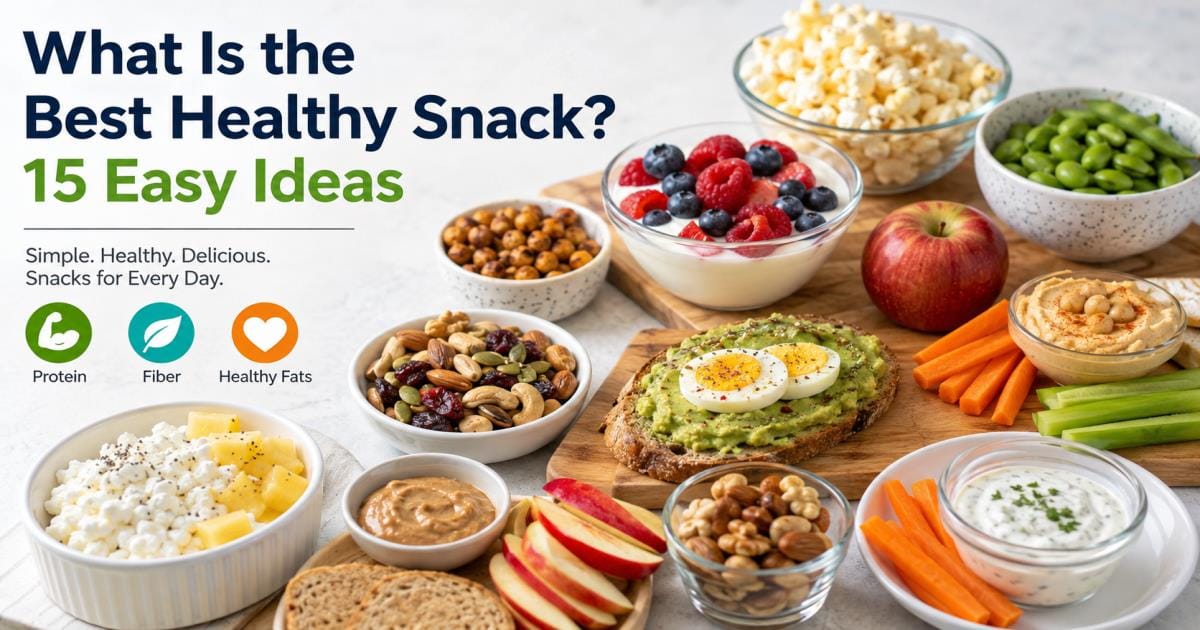

The best healthy snack is any combination of protein, fiber-rich carbohydrates, and healthy fats that stabilizes blood sugar and stops hunger between meals. Yet, no single food suits every person. Your ideal choice depends on your daily activity, personal health targets, and taste preferences.
Snacking often gets a bad reputation because processed snacks rely on refined flour, sugar, and salt. Smart choices bridge the gap between meals, prevent overeating later, and deliver vital nutrients your body needs.
This guide covers what makes a snack nutritious, how to combine macronutrients correctly, and 15 simple snack ideas you can prepare at home or work.
What Is the Best Healthy Snack?
A genuinely healthy snack fuels the body with quality ingredients rather than empty calories. To choose wisely, you must look past marketing terms like natural, organic, or diet and focus on nutrient density.
Nutrient density means a food delivers a high amount of vitamins, minerals, complex carbohydrates, healthy fats, or lean protein relative to its total calorie count.
- Protein: Repairs tissues and triggers hormones that signal fullness.
- Fiber: Slows down digestion, supports gut health, and stabilizes energy levels.
- Healthy Fats: Help absorb fat-soluble vitamins and provide lasting satiety.
- Vitamins and Minerals: Support immune function, bone strength, and daily metabolic processes.
Portion size matters just as much as food quality. Even nutrient-dense items like almonds or avocados cause weight gain if consumed in unmeasured amounts. The key is balancing quality ingredients with sensible portion sizes.
How to Choose a Healthy Snack
Building a smart snack does not require a culinary degree. By focusing on three nutritional pillars and checking product labels, you can assemble a nourishing bite in minutes.
Look for Protein
Protein acts as the anchor of a satisfying snack. Excellent options include Greek yogurt, eggs, cottage cheese, nuts, seeds, and edamame. On average, adding 10 to 15 grams of protein to a snack helps control appetite for several hours.
Add Fiber-Rich Foods
Fiber slows down how fast the body absorbs sugar, preventing sudden energy crashes. Great sources of fiber include fresh fruits, crunchy vegetables, whole grains, beans, nuts, and seeds.
Include Healthy Fats
Healthy fats add flavor and creaminess while keeping you full between meals. Incorporate modest amounts of nuts, natural nut butter, seeds, or avocado slices into your daily routine.
Watch Added Sugar, Sodium and Saturated Fat
When buying packaged foods, reading nutrition labels is essential.
- Spotting Sugar: Distinguish between naturally occurring sugars (found in whole fruits and plain dairy) and added sugars (found in flavored yogurts, granola bars, and packaged sweets).
- Following Guidelines: Use USDA MyPlate principles as your foundation, ensuring half your snack components consist of fruits and vegetables alongside lean proteins and whole grains.
15 Easy Healthy Snack Ideas
1. Greek Yogurt With Berries
- Components: Protein plus fruit and fiber.
- Why it works: Plain Greek yogurt offers a massive protein boost, while berries add natural sweetness and powerful antioxidants. This combination works well as a breakfast-style bite or an afternoon pick-me-up.
2. Apple With Peanut Butter
- Components: Fiber from the apple plus protein and healthy fats from peanut butter.
- Why it works: The crisp crunch of an apple pairs wonderfully with rich peanut butter. Stick to a practical portion of one medium apple paired with one to two tablespoons of natural peanut butter.
3. Carrots and Hummus
- Components: Crunchy vegetables with a plant-based protein and fiber source.
- Why it works: Baby carrots or sliced bell peppers dipped in savory chickpea hummus provide a satisfying crunch along with steady, plant-powered energy.
4. Cottage Cheese With Fresh Fruit
- Components: High-protein option with fruit for added fiber and flavor.
- Cottage cheese is high in casein protein, which is digested slowly by the body. This slow digestion allows for a sustained release of amino acids, making it an excellent source of protein . Pairing it with pineapple chunks, peaches, or berries balances the savory saltiness with natural fruit sweetness.
5. Hard-Boiled Egg With Whole-Grain Crackers
- Components: Simple protein plus whole-grain carbohydrates.
- Why it works: Hard-boiled eggs are portable and nutrient-dense. Eating one alongside a few fiber-rich whole-grain crackers creates a balanced mini-meal.
6. Nuts and Fresh Fruit
- Components: Portable option for work, school, or travel.
- Why it works: A handful of almonds, walnuts, or cashews paired with an orange, banana, or pear requires zero refrigeration or cooking. Because nuts are calorie-dense, portion control matters—aim for a small handful (about one ounce).
7. Air-Popped Popcorn
- Components: A simple whole-grain snack.
- Why it works: Popcorn is naturally high in whole-grain fiber and volume, meaning you can eat a larger physical portion for very few calories. Keep added butter, heavy salt, and sugary toppings moderate.
8. Edamame
- Components: Plant-based protein and fiber.
- Why it works: Steamed young soybeans served warm with a light pinch of sea salt make a quick, savory, and immensely satisfying snack.
9. Banana With Almond or Peanut Butter
- Components: Convenient carbohydrate source paired with fat and protein.
- Why it works: A banana provides quick-acting carbohydrates for energy, while the nut butter slows down digestion so you stay full longer.
10. Veggies With Greek Yogurt Dip
- Components: Cucumbers, bell peppers, carrots, or celery mixed with a savory yogurt dip.
- Why it works: Plain Greek yogurt mixed with herbs, garlic powder, or a dash of lemon juice creates a high-protein dip that makes eating raw vegetables far more enjoyable.
11. Roasted Chickpeas
- Components: Crunchy alternative to potato chips.
- Why it works: Rinsed and oven-roasted chickpeas tossed in olive oil and spices provide a wonderful crunch along with a heavy dose of plant protein and fiber.
12. Whole-Grain Toast With Avocado
- Components: Whole grains plus healthy fats.
- Why it works: Mash half an avocado onto a slice of toasted whole-grain bread for a filling snack.Top your dish with a fried or boiled egg for an added boost of protein.
13. Smoothie With Yogurt, Berries and Chia Seeds
- Components: Drinkable nutrition blend.
- Why it works: This is an easy option for people who prefer liquid snacks. Blend plain yogurt, frozen berries, spinach, and a spoonful of chia seeds. Avoid adding fruit juices or honey to prevent turning your smoothie into a high-sugar dessert.
14. Trail Mix With Nuts, Seeds and Dried Fruit
- Components: Portable and customizable mix.
- Why it works: Create your own blend of raw nuts, pumpkin seeds, and unsweetened dried fruit. Always choose unsalted nuts and minimal added sugar in the dried fruit.
15. Whole-Grain Crackers With Turkey and Avocado
- Components: Protein plus whole grains and healthy fats.
- Why it works: Layer lean deli turkey slices and thin avocado slices onto whole-grain crackers. This works exceptionally well as a filling snack when main meals are several hours away.
What Is the Best Healthy Snack for Different Goals?
Best Healthy Snack for Weight Management
Focus on filling food combinations rich in protein and fiber, such as Greek yogurt with berries or carrots with hummus. These options expand in the stomach and keep hunger hormones low. Even when it comes to healthy foods, portion sizes still matter .
Best Healthy Snack for Energy
Combine carbohydrate-rich foods with a small amount of protein or healthy fats. For example, a banana with almond butter gives an immediate carbohydrate lift sustained by slow-burning fats.
Best High-Protein Healthy Snack
Greek yogurt, cottage cheese, hard-boiled eggs, and edamame lead the category. They help preserve lean muscle mass and stabilize blood sugar levels throughout a busy day.
Best High-Fiber Healthy Snack
Fresh fruits, raw vegetables, roasted chickpeas, nuts, seeds, and whole-grain items top this list. They promote healthy digestion and long-lasting fullness.
Best Healthy Snack for Work or School
Portability and low-mess preparation are essential here. Whole pieces of fruit paired with individual nut butter packets, hard-boiled eggs, or portion-controlled trail mix work best.
Best Healthy Snack Before Exercise
Choose easily digestible carbohydrate options like a small banana or a piece of white toast. If workouts are strenuous, adding a small amount of protein protects muscle tissue.
Are Packaged Snacks Healthy?
Many people assume that anything bought in a bag or box is automatically unhealthy. However, modern food manufacturing makes it easy to find wholesome, convenient packaged options.
The secret lies in inspecting the ingredient list and the Nutrition Facts label. Look for products that list whole grains, nuts, or seeds first, and check for useful amounts of protein and fiber. At the same time, keep an eye out for excessive added sugars, high sodium, and unhealthy saturated fats.
Healthy Snack Mistakes to Avoid
- Eating Directly from a Large Package: This makes it easy to lose track of portions and overeat. Always portion your snack into a small bowl or plate.
- Choosing Snacks Based Only on “Low-Fat” or “Natural” Claims: Many low-fat packaged foods make up for lost flavor by adding massive amounts of sugar.
- Ignoring Protein and Fiber: Eating pure carbohydrates like plain pretzels leaves you hungry again within thirty minutes.
- Drinking High-Sugar Beverages as Snacks: Sweetened coffee drinks, sodas, and bottled juices deliver a flood of liquid sugar without providing real satiety.
- Turning Every Snack Into a Full Meal: A snack should bridge the gap between meals, not equal the calorie count of lunch or dinner.
- Forgetting Individual Dietary Needs and Allergies: Always tailor your choices to fit specific medical, cultural, or personal nutritional requirements.
How to Build a Balanced Snack in 3 Steps
- Step 1: Choose a protein source (e.g., hard-boiled egg, Greek yogurt, or edamame).
- Step 2: Add a fruit, vegetable, or whole grain (e.g., apple slices, baby carrots, or whole-grain crackers).
- Step 3: Include a small amount of healthy fat when appropriate (e.g., a few nuts, seeds, or avocado slices).
Mix-and-Match Example based on USDA MyPlate guidance: Pair a cup of sliced bell peppers with one-third cup of hummus and a handful of whole-wheat pita chips.
How Many Snacks Should You Eat a Day?
There is no universal magic number for daily snack frequency. The right amount depends entirely on personal hunger levels, meal timing, physical activity level, and daily energy needs.
If three main meals keep you comfortably full and energized, snacking remains optional. If you experience long gaps between meals or have high energy demands, one or two balanced snacks keep metabolism running smoothly.
Final Takeaway
Determining what is the best healthy snack always comes down to personal hunger, nutrition needs, daily activity, and taste preferences. Focus your choices on simple combinations built around protein, fiber-rich foods, and minimally processed ingredients. Above all, choose snacks that you genuinely enjoy and can easily prepare on a consistent basis.
Frequently Asked Questions
What is the healthiest snack to eat every day?
The healthiest daily snack is typically a combination of fresh produce and a source of lean protein or healthy fats, such as an apple with a spoonful of peanut butter or plain Greek yogurt with fresh berries.
What is the best healthy snack for weight loss?
Snacks high in both protein and fiber—like crunchy vegetables with hummus or cottage cheese with fruit—work best for weight loss because they help control appetite and prevent overeating at the next meal.
What snack keeps you full the longest?
Foods combining slow-digesting protein, fiber, and healthy fats stay in the stomach longer. Examples include hard-boiled eggs with whole-grain crackers or avocado toast topped with an egg.
What is a healthy snack with protein?
Greek yogurt, cottage cheese, hard-boiled eggs, roasted edamame, and handfuls of unsalted nuts provide fantastic sources of wholesome protein.
What is the best low-calorie healthy snack?
Air-popped popcorn, cucumber slices with a light yogurt dip, and fresh berries offer high volume and satisfying crunch for very few calories.
Are fruits good healthy snacks?
Yes, fruits serve as exceptional healthy snacks. They are packed with natural vitamins, minerals, water, and fiber, making them both refreshing and nourishing.
Are nuts healthy snacks?
Nuts are very healthy because they provide heart-healthy fats, plant protein, and minerals. Because they are calorie-dense, stick to a small, measured handful per serving.
Is Greek yogurt a healthy snack?
Yes, plain Greek yogurt stands out as an outstanding snack choice. It contains twice the protein of regular yogurt and supports both muscle repair and gut health.
What should I eat if I am hungry between meals?
Opt for a mini-meal that pairs a fiber source with a protein source, such as celery sticks with peanut butter or a small handful of trail mix with a piece of fruit.
What specific health or fitness goal are you hoping to support most with your daily snacking habits?


[…] Traditional Egyptian and Middle Eastern eating habits already include several naturally healthy snack options. […]