
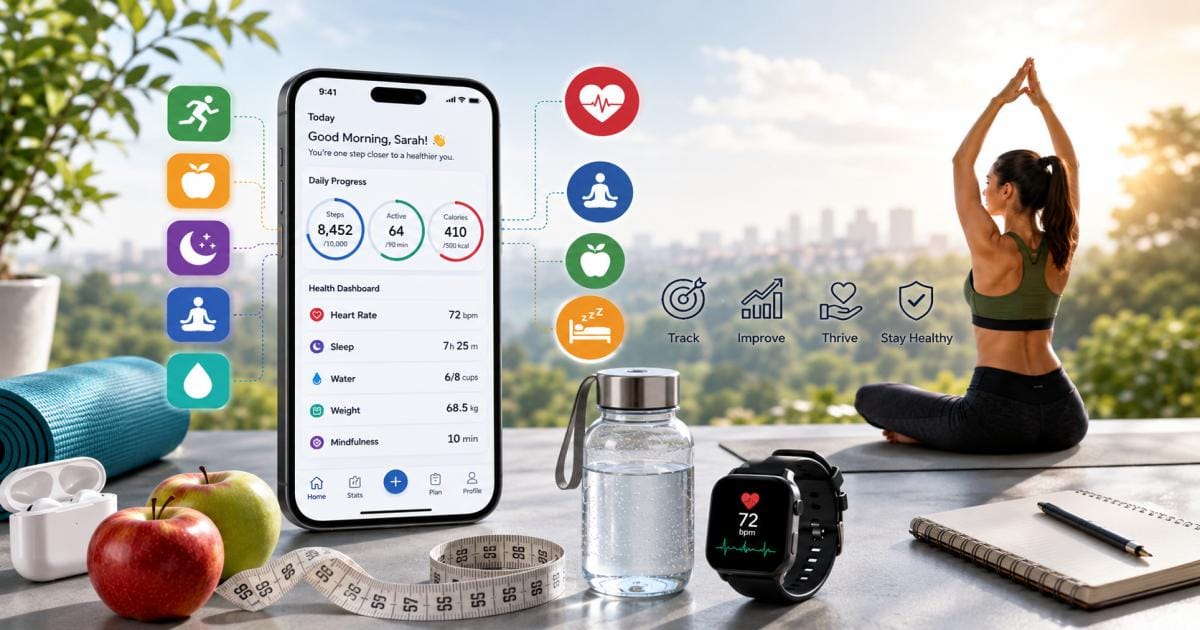

The best apps for health in 2026 help people stay active, eat better, sleep well, manage stress, and keep track of care with less effort. The right app depends on your goal, your phone, and how much guidance you want.
If you want one clear answer right away, the best apps for health are the ones you will actually use every day. That means simple design, clear tracking, and features that fit your real life.
What Are Health Apps?
Definition of health apps
Health apps are mobile apps that support wellness, fitness, or medical care. Some count steps or calories. Others track sleep, remind you about medicine, or let you speak with a doctor.
Different types of health apps
Health apps cover many needs. Common types include fitness apps, food trackers, sleep apps, meditation apps, women’s health apps, medicine reminder apps, chronic condition apps, and telehealth apps.
Who can benefit from using health apps?
Almost anyone can use them. A beginner may want help building habits. A parent may want to track family wellness. A patient may need medication reminders. A senior may want a simple app with large buttons and clear alerts.
How We Chose the Best Apps for Health
Our evaluation criteria
We focused on apps that solve a real problem. We also checked ease of use, feature quality, device support, trust, and cost. An app only matters if it works well in daily life.
Why these criteria matter
Many people download apps and stop using them after a week. That usually happens when the app feels hard, busy, or unclear. A good health app should make healthy habits easier, not more stressful.
Best Apps for Health in 2026
1. MyFitnessPal
Overview: MyFitnessPal is one of the most useful apps for food tracking and calorie control. Many people use it to lose weight, watch portions, or understand what they eat each day.
Key Features: Food diary, barcode scanner, calorie goals, macro tracking, meal logging, and wearable support.
Pros: Easy to start, large food database, helpful for beginners, strong for nutrition tracking.
Cons: Some useful tools sit behind a paid plan, and food logging can feel repetitive.
Pricing: Free plan available; premium plan available.
Best For: Weight loss, nutrition, calorie tracking.
2. Apple Health
Overview: Apple Health is a strong all-in-one health hub for iPhone users. It pulls together activity, sleep, heart data, and app results in one place.
Key Features: Activity tracking, sleep data, heart trends, app connection, and wearable sync.
Pros: Built into iPhone, clean layout, easy to manage.
Cons: Works best inside the Apple system.
Pricing: Free.
Best For: General health tracking.
3. Google Fit
Overview: Google Fit is a simple app for movement and daily activity. It suits users who want a light tool that does not feel crowded.
Key Features: Step tracking, activity goals, heart points, app sync, and basic health tracking.
Pros: Free, easy to use, good for Android users.
Cons: Less detailed than some other apps.
Pricing: Free.
Best For: Daily movement tracking.
4. Nike Training Club
Overview: Nike Training Club offers guided workouts for home or gym use. It works well for people who want a plan without paying right away.
Key Features: Strength workouts, yoga, mobility, beginner plans, and guided sessions.
Pros: Good free content, varied workouts, simple coaching.
Cons: Not built for food or medical tracking.
Pricing: Free with some premium options in some regions.
Best For: Fitness, workout plans, beginners.
5. Calm
Overview: Calm helps with meditation, stress relief, and sleep. Many people use it when they want short, quiet breaks during a busy day.
Key Features: Sleep stories, guided meditation, breathing tools, music, and calm sessions.
Pros: High-quality audio, easy to use, useful for sleep and stress.
Cons: Many top features need a paid plan.
Pricing: Free trial and paid plan.
Best For: Stress, meditation, sleep.
6. Headspace
Overview: Headspace is another top app for mindfulness. It works well for people who want short meditation lessons and simple daily practice.
Key Features: Meditation, focus sessions, sleep tools, and stress support.
Pros: Friendly tone, good for beginners, clear structure.
Cons: The paid plan can be costly for some users.
Pricing: Free trial and subscription.
Best For: Meditation, focus, mental calm.
7. Sleep Cycle
Overview: Sleep Cycle helps people learn more about sleep patterns and wake up more naturally. It gives useful sleep insights without much setup.
Key Features: Sleep tracking, smart alarm, sleep notes, and trend reports.
Pros: Easy to use, helpful sleep data, simple alarm tools.
Cons: It is not a medical test.
Pricing: Free and premium plans.
Best For: Sleep tracking, sleep habits.
8. Teladoc
Overview: Teladoc lets users speak with doctors online. It is useful when someone needs quick medical advice and cannot visit a clinic.
Key Features: Virtual doctor visits, medical support, and care access in supported regions.
Pros: Saves time, convenient, useful for general care.
Cons: Not available everywhere.
Pricing: Varies by country and plan.
Best For: Telehealth, doctor access.
9. Noom
Overview: Noom focuses on weight loss through behavior change. It helps users build better eating and habit patterns over time.
Key Features: Food logging, lessons, coaching, habit support, and progress tracking.
Pros: Strong for long-term change, not just quick tracking.
Cons: Subscription cost can be high.
Pricing: Paid plan.
Best For: Weight loss, habit change.
10. Flo
Overview: Flo is a popular women’s health app for cycle tracking, fertility, and pregnancy support. It gives clear health insights in a simple format.
Key Features: Period tracking, ovulation estimates, symptom logs, pregnancy mode, and health tips.
Pros: Helpful for cycle awareness, easy to use.
Cons: Some features may need premium access.
Pricing: Free and paid plans.
Best For: Women’s health, cycle tracking, pregnancy.
Best Free Apps for Health
Best free overall
Apple Health and Google Fit are strong, free choices for general tracking. They are simple, broad, and useful for daily habits.
Best free calorie tracker
MyFitnessPal is one of the best free options for calorie and food tracking. It helps people watch meals and portion sizes without a heavy learning curve.
Best free sleep tracker
Sleep Cycle is a useful free sleep app for people who want basic sleep tracking before paying for more features.
Best Paid Health Apps Worth Paying For
Premium fitness apps
People who want deeper workout plans or coaching may prefer paid fitness apps. These often give more structure, better progress tracking, and more personal support.
Premium wellness apps
Calm and Headspace are often worth paying for if stress relief, mindfulness, or sleep is the main goal. Their strongest tools usually sit in the paid version.
Premium medical apps
Telehealth apps like Teladoc can be worth the cost when users need fast doctor access, remote care, or support for a family.
Best Health Apps by Category
Best nutrition apps
MyFitnessPal remains one of the best nutrition apps because it makes food logging and calorie control simple. It suits people who want more awareness around what they eat.
Best weight loss apps
MyFitnessPal is best for tracking, while Noom is better for habit change. The better choice depends on whether you want numbers or coaching.
Best women’s health apps
Flo is one of the strongest options for period tracking, fertility support, and pregnancy-related health.
Best medication reminder apps
Medication reminder apps help people stay on schedule. They are useful for seniors, patients with long-term needs, and busy families who manage several medicines.
Best Apps for Health Available in Egypt
Apps popular among Egyptian users
Many users in Egypt prefer apps that are easy to install, simple to understand, and useful on low to mid-range phones. Apps like Google Fit, MyFitnessPal, Flo, Calm, and Sleep Cycle can work well for that reason.
Telemedicine apps in Egypt
Telemedicine is growing because people want faster care and less travel. The best option depends on local support, language options, and whether the service works in Egypt.
Arabic-language health apps
Arabic support matters for many users. Clear menus, reminder text, and simple health advice make apps easier to trust and use.
Benefits of Using Health Apps
Better fitness tracking
Health apps help people see how much they move each day. That makes it easier to build habits and stay steady over time.
Improved nutrition
Food apps make eating patterns easier to understand. Many users find that tracking meals helps them notice extra snacks, large portions, or missed meals.
Mental wellness support
Meditation apps make stress care easier to fit into a busy day. Even a short session can help people reset.
Better sleep quality
Sleep apps can show trends in bedtime, wake time, and sleep patterns. That can help people spot bad habits and improve their routine.
Potential Limitations of Health Apps
Privacy concerns
Health apps collect personal data, so privacy should always come first. Users should check what data the app stores and how it shares it.
Data accuracy
Health apps are helpful, but they are not perfect. Step counts, sleep scores, and calorie estimates are usually close enough for habits, but not always exact.
Over-reliance on technology
A health app should support you, not control you. If checking numbers starts to cause stress, it may help to simplify your setup.
How to Choose the Best Health App for Your Needs
Identify your health goals
Start with one main goal. You may want to lose weight, sleep better, reduce stress, or remember medicine on time.
Check medical credibility
If an app gives health advice, symptom checks, or treatment support, it should feel trustworthy. Look for clear expert input and a clear purpose.
Consider data privacy
Read the privacy settings before you commit. Give only the permissions the app really needs.
Look for expert-backed recommendations
Choose apps that have been tested by people who know the field. That gives you a better chance of finding an app that is useful and safe.
Essential Features to Look for in the Best Health Apps
A good health app should be easy to use. Clear menus, large text, and simple steps make a big difference.
It should also protect user data with strong security. Integration with wearables is helpful for users who track activity, sleep, or heart rate.
AI-based insights can also be useful when they stay clear and practical. The best apps explain data in plain words, not confusing charts alone.
Privacy and Security: Are Health Apps Safe?
Data encryption
Good apps protect user data with encryption. That lowers the risk of personal health information being exposed.
HIPAA/GDPR considerations
Some apps follow health or privacy rules, but not all do. Users should never assume every app follows the same standard.
Permission management
Only allow permissions the app truly needs. A simple step app should not ask for more access than necessary.
Tips to protect your personal health information
Use a strong password, update your apps, and turn on two-step login when possible. Also check settings often so you know what data is shared.
Frequently Asked Questions
What are the best apps for health in 2026?
The best apps depend on your goal. Good all-around choices include MyFitnessPal, Apple Health, Google Fit, Calm, Sleep Cycle, Flo, and Teladoc.
Which health apps are free?
Apple Health, Google Fit, and Nike Training Club are strong free options. MyFitnessPal and Sleep Cycle also offer free plans.
Are health apps safe to use?
Most are safe if you choose trusted apps and review privacy settings. Do not share more data than you need to.
Which health app is best for weight loss?
MyFitnessPal is a strong choice for calorie tracking. Noom is better for habit change and coaching.
Which health app is best for mental health?
Calm and Headspace are two of the best-known apps for stress, mindfulness, and sleep support.
Which health apps work offline?
Some workout, meditation, and reminder apps offer offline use. Downloadable sessions help when internet access is limited.
Are there good health apps available in Egypt?
Yes. Many global apps work in Egypt, and some telehealth services may also be available depending on local support.
Expert Tips for Getting the Most Out of Health Apps
Set one or two small goals first. That keeps the app useful and easy to follow.
Turn on reminders so the app fits your routine. Small nudges often work better than big plans.
Connect your wearable if you have one. It can improve tracking and save time.
Check your progress once a week. That helps you spot patterns and stay on track.
Final Verdict: Which Are the Best Apps for Health?
The best apps for health are the ones that fit your daily life. If you want a simple starting point, begin with Apple Health, Google Fit, or MyFitnessPal.
If your goal is stress, sleep, or mindfulness, Calm or Headspace may be a better fit. If you need cycle tracking, Flo is a strong choice. If you want remote medical access, Teladoc is worth looking at.
Pick based on your goal, not popularity. That is the easiest way to find an app you will keep using.



[…] health apps are mobile programs built to support your emotional and psychological well-being. They run on […]
[…] keep you full. The right mid-day bite provides steady energy without adding excess calories. This guide explains what to eat to overcome cravings and stay on […]
[…] your diet, your exercise, your willpower. But social connection plays a measurable role in how healthy people actually stay. People with consistent social ties tend to report better stress management, steadier moods, and […]